

A home extension is the construction of additional new or enlarged rooms added onto an existing house after it was originally built, with the purpose of increasing usable living space. Extensions can be built to the rear, side, or front of a property, or by adding storeys above the existing structure. For homeowners in Warrington, Great Sankey, Lymm, and Appleton, an extension is often the most practical way to gain space without the cost and disruption of moving. Done well, a home extension increases both your quality of life and your property’s market value, making it one of the most rewarding investments you can make in your home.
What is a home extension, and which type suits your property?
Common types of house extensions include single-storey rear extensions, double-storey extensions, wrap-around extensions, porches, conservatories, and garage conversions. Each type varies in cost, complexity, and suitability depending on your property layout and household needs. Understanding the differences helps you choose the right approach before you spend a penny on design fees.
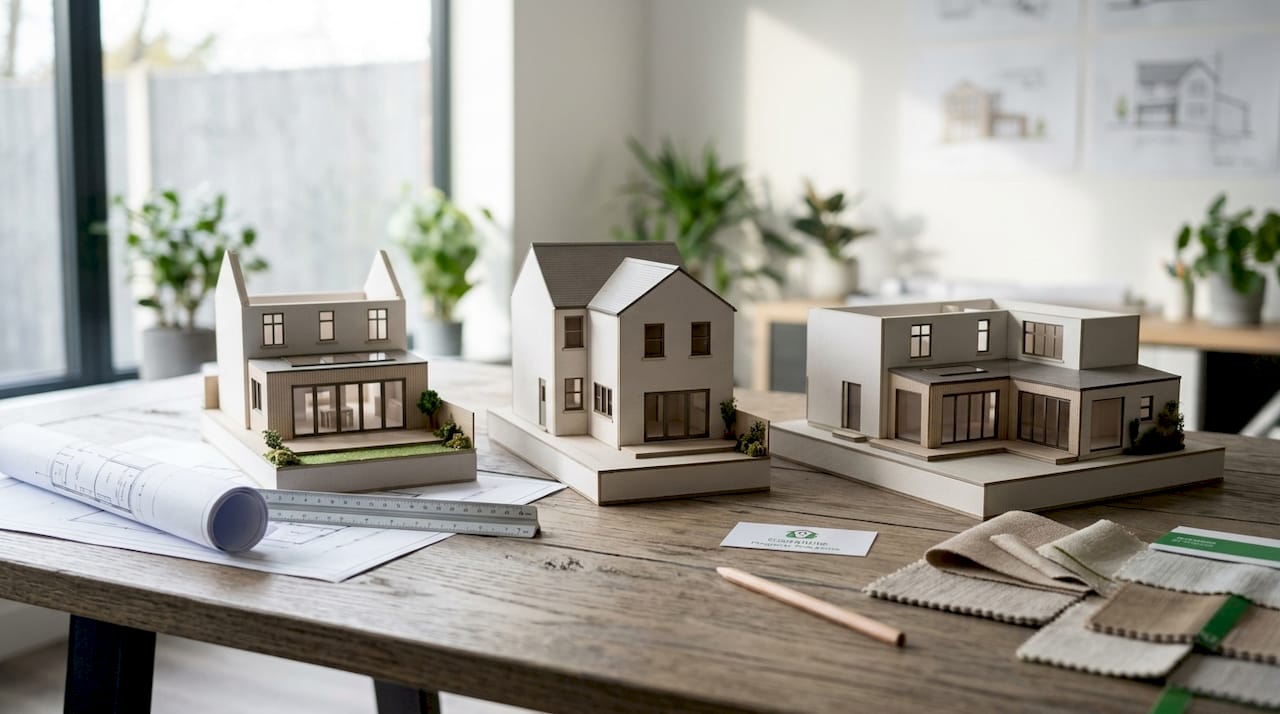
Single-storey rear extensions are the most popular choice for homeowners in Warrington and surrounding areas. They typically extend the kitchen or living room into the garden, creating open-plan family spaces with bi-folding doors or large glazed panels. They are relatively straightforward to build and often fall within Permitted Development rights, which we cover in the next section.
Double-storey extensions add two floors at once, delivering significantly more space per pound spent on foundations and groundwork. A double-storey rear extension might add a larger kitchen below and two extra bedrooms above. They require full planning permission in most cases and a longer build programme, but the value gain is proportionally greater.
Wrap-around and full-width extensions combine a rear and side extension into a single L-shaped or full-width structure. This approach maximises ground-floor space and suits detached or semi-detached properties in areas like Lymm and Appleton where plot width allows. They are more complex to design and build, but the result is a genuinely transformed ground floor.
| Extension type | Approximate cost | Planning route | Best suited to |
|---|---|---|---|
| Single-storey rear | £20,000–£60,000 | Often Permitted Development | Most property types |
| Double-storey rear | £45,000–£120,000 | Usually full planning permission | Detached and semi-detached |
| Wrap-around | £50,000–£100,000 | Usually full planning permission | Detached and semi-detached |
| Conservatory | £10,000–£40,000 | Often Permitted Development | Rear of most properties |
| Garage conversion | £8,000–£25,000 | Usually Permitted Development | Properties with integral garage |
Note: Costs are indicative ranges for the Warrington area and vary based on specification, materials, and site conditions.
How do planning permissions and regulations affect home extensions?
Permitted Development rights allow homeowners to extend without full planning permission, but only when strict conditions are fully met. These rights are covered by the General Permitted Development Order (GPDO) Class A for house enlargements. The key word is “strict.” Permitted Development is not an automatic green light. It is a checklist of conditions, and failing any single one means you need full planning permission instead.
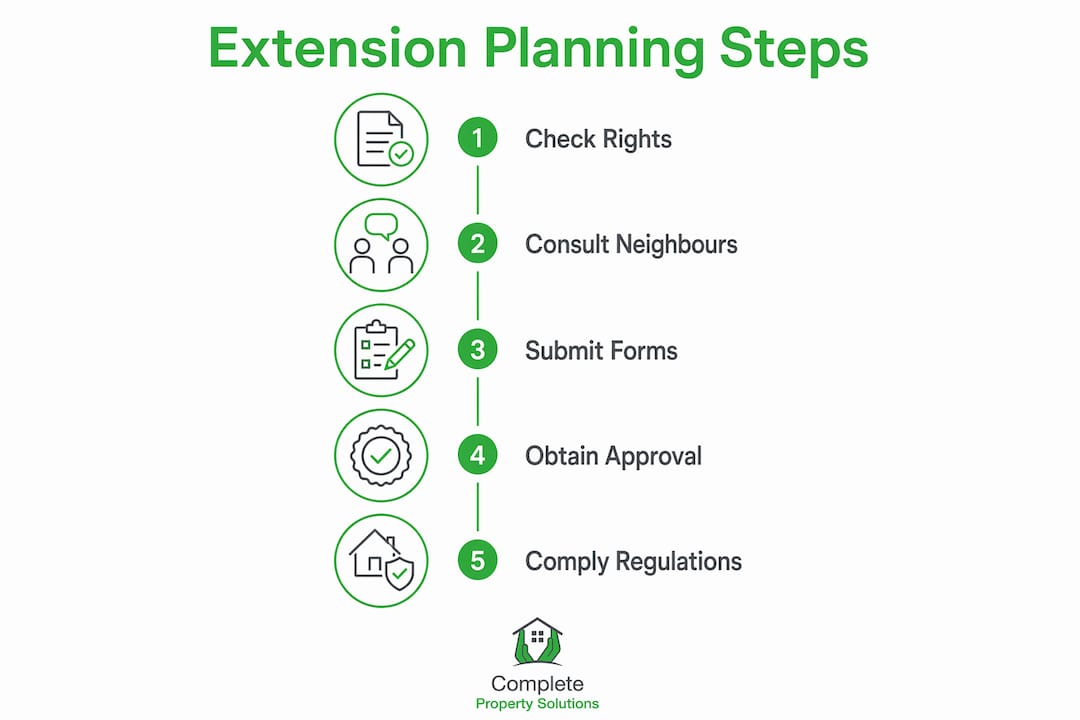
Typical Permitted Development rear extension depths are 3 metres for terraced and semi-detached houses and 4 metres for detached properties. Larger projects require prior approval or full planning permission. Height, materials, and proximity to boundaries all form part of the compliance check. Homeowners in conservation areas, such as parts of Lymm, face additional restrictions regardless of size.
Key planning considerations include:
- Permitted Development limits: Confirm depth, height, and eaves height comply with GPDO Class A before starting any design work.
- Conservation areas and listed buildings: These automatically restrict or remove Permitted Development rights. Check with Warrington Borough Council before proceeding.
- Prior approval: Larger single-storey rear extensions (up to 6 metres for semi-detached and 8 metres for detached) may qualify under the Neighbour Consultation Scheme but require prior approval from the local authority.
- Full planning permission: Required for double-storey extensions, front extensions visible from the highway, and any project exceeding Permitted Development limits.
- Building Regulations: A separate approval from planning permission, focusing on structural safety, fire safety, energy efficiency, drainage, and ventilation. Both approvals must be satisfied simultaneously.
Building Regulations and planning permissions are separate approvals, and a project must satisfy both to be fully compliant. Many homeowners are surprised to learn that a Permitted Development extension still requires a Building Regulations application. Your builder or architect manages this process, but you need to understand it exists.
The Party Wall etc. Act 1996 requires formal notices when extension work affects shared walls or involves excavations near neighbours. The Act provides a 14-day response window for neighbours to consent or dissent. If a neighbour dissents, a party wall surveyor is appointed, which adds time and cost to your project.
Pro Tip: Party Wall Act procedures often determine project timelines more than planning permissions. Serve party wall notices as early as possible, ideally before you submit your planning application, to avoid delays on site.
For a clear overview of when planning permission is required, the Complete-property guide covers the most common scenarios for Warrington homeowners.
What are the main benefits of a home extension?
Adding a home extension avoids the significant cost and disruption of moving house. Estate agent fees, stamp duty, removal costs, and the emotional toll of uprooting your family add up quickly. An extension lets you stay in the neighbourhood you know, keep your children in their schools, and still get the space you need.
Home extensions can increase property value by an average of 10–20%, though this varies based on property type, location, and quality of build. That figure reflects improved living space and added functionality. In a strong market like Warrington and Great Sankey, a well-designed rear extension or double-storey addition can return more than its build cost when you eventually sell.
The benefits extend well beyond resale value:
- More usable space. A rear extension can transform a cramped kitchen into a full open-plan kitchen and dining room, the single most popular home improvement in the UK.
- Flexible room use. You can design a home office, a playroom, a guest bedroom, or a utility room to suit your household’s specific needs.
- Improved energy efficiency. A well-designed extension with thermally efficient materials, quality insulation, and double glazing can reduce heat loss across the whole ground floor.
- Better daily comfort. Natural light from glazed rear extensions changes how a home feels throughout the day, particularly during the shorter winter months.
- Avoiding the property chain. Staying put removes the risk of a sale falling through and the uncertainty that comes with buying and selling simultaneously.
“The best extension projects we see are the ones where the homeowner has thought clearly about how they actually live in their home, not just how they want it to look.” — Complete-property
How should you plan and manage a home extension project?
RIBA recommends engaging a Chartered Architect early, using services like RIBA’s Find an Architect to clarify household needs and assist with step-by-step planning. The first task is not choosing a builder. It is writing a clear brief that captures exactly what your household needs from the extension. How many people use the space? What activities happen there? What is your budget ceiling?
A well-run extension project follows a clear sequence:
- Initial consultation: Meet with an architect or experienced builder to discuss your brief, budget, and site constraints.
- Design: Drawings are produced to reflect your brief and comply with planning requirements. This stage often involves several rounds of revision.
- Planning approval: Submit a Permitted Development notification or full planning application to Warrington Borough Council as appropriate.
- Building Regulations: Submit a Building Regulations application separately, covering structural, thermal, drainage, and fire safety requirements.
- Party wall notices: Serve notices on affected neighbours and allow the statutory response period before work begins.
- Construction: Your builder manages the build programme, with regular site inspections by the Building Control officer.
- Completion certificate: Issued by Building Control once the work passes final inspection. Keep this document. You will need it when you sell.
Upfront household brief clarity is a critical differentiator for a successful extension project. It reduces delays and confusion during design and approval phases. Homeowners who skip this step often find themselves making expensive changes mid-build.
Budgeting deserves particular attention. Always include a contingency fund of at least 10–15% of your build cost. Unforeseen groundwork issues, material price changes, and design amendments all eat into budgets. Get at least three detailed quotes from local builders, and make sure each quote covers the same scope of work. For a thorough look at what to expect from concept to completion, the Complete-property guide walks through each phase in detail.
Pro Tip: Extension designs that appear small on paper can still trigger complex structural engineering, drainage, and thermal performance requirements. Ask your builder or architect to confirm all technical requirements before you finalise your budget.
Communicate with your neighbours early, even before you submit any applications. A brief conversation about your plans costs nothing and can prevent objections, disputes, and delays. Homeowners in terraced streets in Warrington and Great Sankey particularly benefit from this approach, where shared boundaries and party walls are common.
Key takeaways
A home extension is one of the most effective ways to increase living space and property value without moving house, but success depends on thorough planning, correct permissions, and a clear household brief from the outset.
| Point | Details |
|---|---|
| Define your brief first | Write a clear list of household needs before approaching architects or builders. |
| Know your planning route | Check whether your project qualifies for Permitted Development or needs full planning permission. |
| Treat Building Regulations separately | Planning approval and Building Regulations are two distinct approvals; both are required. |
| Serve party wall notices early | Issue notices before submitting planning to avoid delays on site. |
| Budget with a contingency | Set aside 10–15% above your quoted build cost for unforeseen changes. |
My honest view on what makes an extension project succeed
After more than 35 years working on home extensions across Warrington, Great Sankey, Lymm, and Appleton, the projects that go smoothly share one thing in common: the homeowner did their homework before anyone picked up a pencil.
The biggest mistakes I see are not technical. They are planning failures. Homeowners who rush to get drawings done before they have agreed internally on what they actually want end up changing the design two or three times. Each change costs money and time. Sit down as a household, write your brief, and agree on your priorities before your first meeting with a builder or architect.
Permitted Development is the second area where I see real problems. Homeowners assume that because their neighbour built a similar extension, theirs will automatically qualify too. That is not how it works. Every property is different. Boundary distances, existing outbuildings, and previous extensions all affect what you can build under Permitted Development. Get it confirmed in writing, either through a Lawful Development Certificate or a pre-application enquiry with the council.
The Party Wall Act catches more people off guard than any other part of the process. I have seen projects delayed by months because notices were served too late. Serve them early, be transparent with your neighbours, and most of the time you will get consent without any drama.
Finally, choose your builder on trust and track record, not just price. A fixed-price guarantee from an experienced local builder is worth far more than a low quote that grows once work starts.
— Gareth
Planning a home extension in Warrington? Complete-property can help
Complete-property has been helping homeowners across Warrington, Great Sankey, Lymm, and Appleton plan and build high-quality home extensions for over 35 years. As a family-run business with a five-star Google rating, we provide fixed-price guarantees, thermally efficient materials, and a personalised service from first consultation through to your completion certificate.

FAQ
What is a home extension, exactly?
A home extension is a new or enlarged room built onto an existing house to increase its usable living space. Extensions can be added to the rear, side, or front of a property, or by adding a storey above the existing structure.
Do I need planning permission for a home extension?
Not always. Many single-storey rear extensions qualify under Permitted Development rights, but strict size, height, and location conditions must all be met. Double-storey extensions and larger projects typically require full planning permission from your local authority.
How much does a home extension cost in Warrington?
Costs vary widely depending on the type and size of extension. Single-storey rear extensions typically range from £20,000 to £60,000, while double-storey extensions can range from £45,000 to £120,000. Always obtain at least three detailed quotes and include a contingency budget.
Can a home extension add value to my property?
Home extensions can increase property value by an average of 10–20%, though the actual uplift depends on property type, location, and build quality. A well-designed extension in a strong market like Warrington typically returns a meaningful proportion of its build cost.
What is the Party Wall Act and does it affect my extension?
The Party Wall etc. Act 1996 requires you to serve formal notices on neighbours when your extension affects a shared wall or involves excavations close to their boundary. Neighbours have 14 days to respond, and disputes can add significant time to your project, so serving notices early is strongly recommended.


