

A hup! extension is a modular, single-storey home extension built using precision-engineered wall panels and integrated roof systems, designed to deliver superior thermal performance and a genuinely stylish finish. Unlike a standard conservatory, a hup! extension functions as a true room: warm in winter, cool in summer, and indistinguishable from a traditionally built space when finished well. For homeowners in Warrington, St Helens, Wigan, and surrounding areas, understanding hup! extensions explained properly means looking past the marketing and focusing on what the system actually delivers in terms of energy efficiency, design quality, and long-term comfort.
!
What are hup! extensions and how do they work?
A hup! extension uses a factory-manufactured panel system, most commonly built around Ultrapanel wall technology and Ultraframe roofing components. The panels are engineered off-site to precise measurements, then assembled on your prepared foundations. The result is a structure that meets full building regulation standards and performs as a permanent room rather than a seasonal add-on.
The system is used most often for single-storey rear extensions, replacing poorly performing conservatories, or creating new kitchen, lounge, or home office spaces. Because the components arrive ready to assemble, the on-site build phase is tidier and more controlled than a traditional brick build. That said, hup! extensions are not positioned as a budget option. They are a quality-led system with a premium finish.
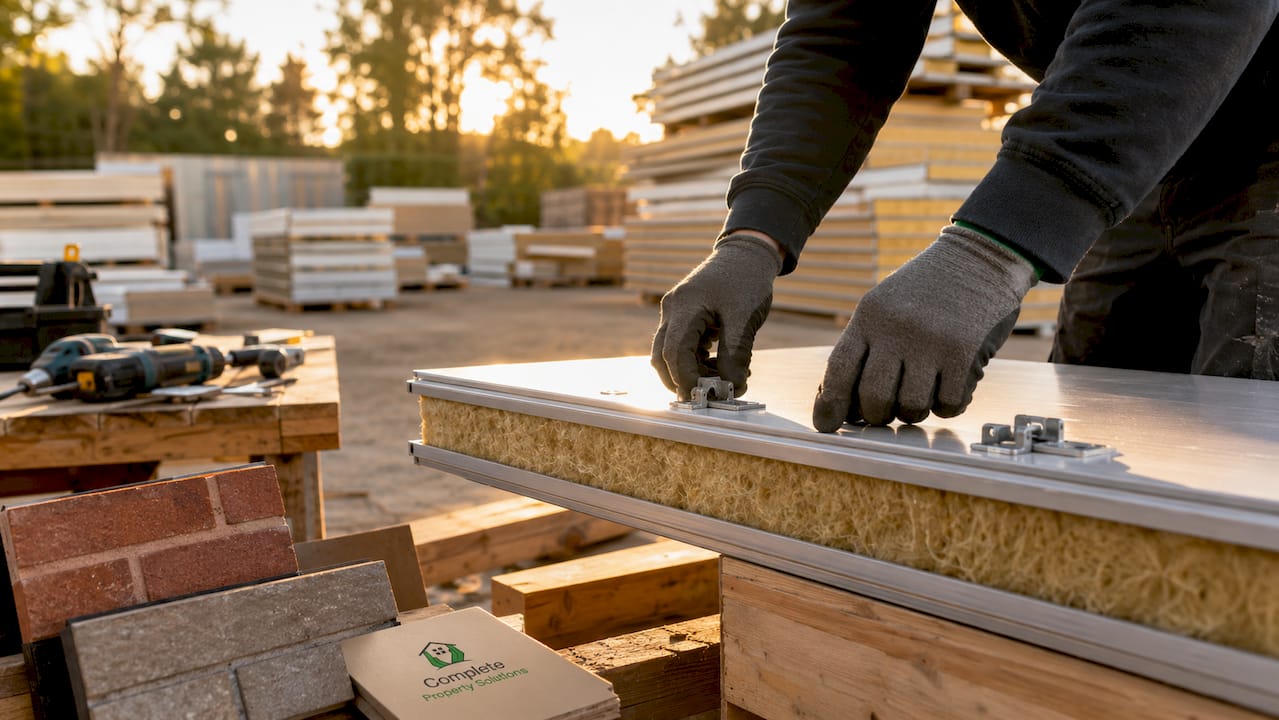
Pro Tip: Ask your installer to show you the Ultrapanel specification sheet before you commit. The U-value figure tells you exactly how well the walls will insulate, and a good installer will share this without hesitation.
Why are hup! extensions so energy efficient?
Thermal performance is the strongest argument for the hup! system. Hup! wall panels achieve U-values as low as 0.17, which is five times more thermally efficient than a standard brick wall. A lower U-value means less heat escapes through the wall, which directly reduces your heating bills and keeps the space comfortable throughout the year.
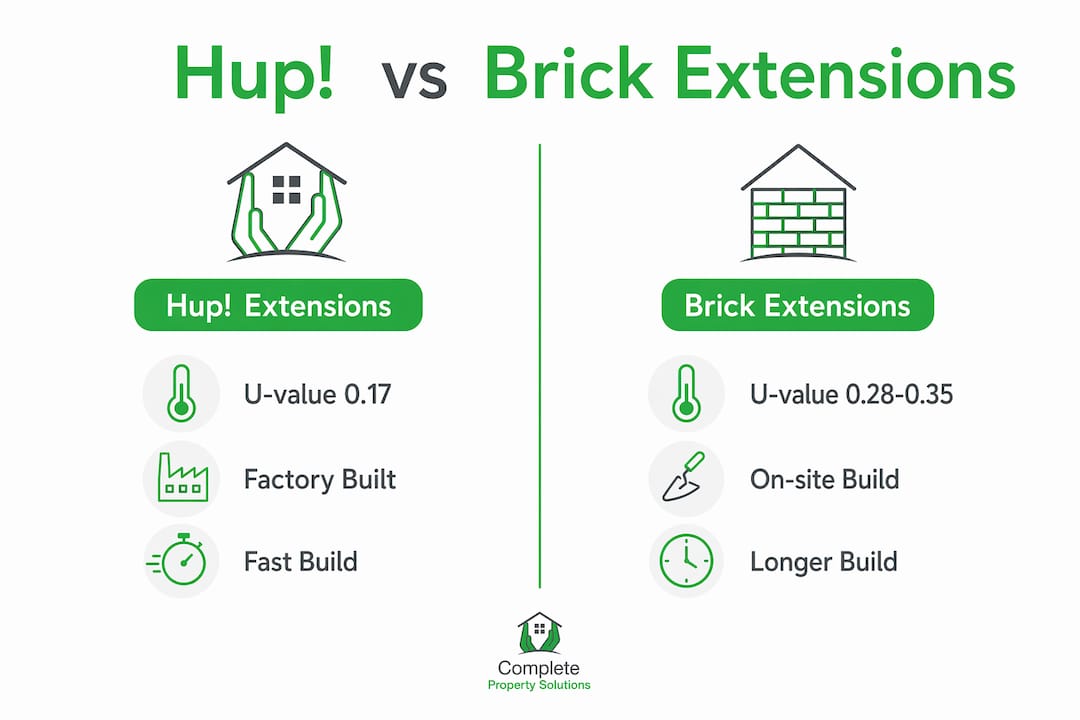
To put that in context, a typical brick cavity wall achieves a U-value of around 0.28 to 0.35 without additional insulation. The hup! panel system beats that figure significantly without requiring extra insulation layers added on-site. That performance is built into the panel itself.
The environmental credentials are equally strong. Zero waste manufacturing and a 60% lower carbon footprint compared to brick and block construction make hup! one of the more responsible choices available to homeowners who care about sustainability. Less waste on-site also means a cleaner, more manageable build process for you.
The key components that deliver this performance include:
- Insulated Ultrapanel walls with factory-set U-values as low as 0.17
- Integrated roof systems including Ultraframe Ultraroof tiled options and Livinroof hybrid designs
- High-performance glazing that complements the wall insulation rather than undermining it
- Airtight construction achieved through precision off-site engineering rather than on-site guesswork
Year-round comfort is a defining feature of the hup! system. Traditional conservatories overheat in summer and lose heat rapidly in winter. A hup! extension avoids both problems because the insulation works in both directions.
!
How much design flexibility do hup! extensions offer?
The assumption that modular means plain is wrong. The hup! system offers genuine design flexibility, and the finished result can look entirely traditional if that suits your home. Exterior finishes including brick slips, render, and timber cladding allow the extension to match or complement your existing property without any visible sign of the modular construction beneath.
Roof choices are where the design options become particularly interesting. You can choose from:
- Ultraroof tiled roofs for a fully solid, traditional appearance with excellent insulation
- Livinroof hybrid roofs combining solid sections with glazed panels for natural light
- Flat roofs with lanterns for a contemporary, architectural look
- Fully glazed roofs where planning and orientation allow
Window and door placement is also fully customisable. Bi-folding doors, French doors, or large fixed glazed panels can all be incorporated, and your installer should work with your existing architecture to make the extension feel like it was always part of the house. You can read more about tiled roof options and solid roof solutions to understand which approach suits your home best.
Pro Tip: If your home has a traditional brick exterior, brick slips on the hup! extension walls are the single most effective way to achieve a joined-up appearance. They are thin brick-faced tiles applied to the panel surface, and they look identical to real brickwork from the street.
Traditional-looking external façades are fully achievable with the hup! system. This is one of the most common misconceptions homeowners have: that modular automatically means modern or industrial. The reality is that a well-specified hup! extension can sit beside a Victorian terrace or a 1930s semi and look completely at home.
Hup! extensions vs traditional brick-and-block builds: what is the difference?
The core difference between a hup! extension and a traditional brick-and-block build is where the construction happens. Brick-and-block work is done entirely on-site, which means the build is subject to weather, material deliveries, and the sequencing of multiple trades. A hup! extension uses panels manufactured in a controlled factory environment, which removes much of that variability.
| Feature | Hup! modular extension | Traditional brick-and-block |
|---|---|---|
| Wall U-value | As low as 0.17 | Typically 0.28–0.35 without added insulation |
| Carbon footprint | 60% lower than brick | Standard construction impact |
| Exterior finish options | Brick slips, render, timber cladding | Brick, render, stone |
| On-site disruption | Reduced, cleaner build environment | Higher, longer on-site activity |
| Project management | Single supplier model | Multiple trades to coordinate |
| Roof options | Ultraroof, Livinroof, flat, glazed | Dependent on builder specification |
A point worth understanding clearly: hup! extensions are not necessarily cheaper than traditional builds, and they are not always faster in terms of total project timeline. What they offer is a more controlled and predictable build process. The single-supplier project management model means one team handles design, survey, manufacture, and installation. That removes the coordination burden from you as the homeowner.
Common misconceptions homeowners should be aware of:
- Hup! is not a conservatory. It meets full building regulation standards as a habitable room.
- Modular does not mean cheap. The system uses premium components and carries a quality-led price point.
- Speed is not the main selling point. Energy efficiency and design quality are the primary reasons to choose hup!.
- The finished look is not limited. Exterior finishes make the modular construction invisible.
Homeowners choose hup! primarily to avoid the prolonged disruption of traditional brick builds and unpredictable weather delays. That is a genuine benefit, but it sits alongside the thermal performance and design quality rather than replacing them as the main reason to choose the system.
!
How do you plan a hup! extension for your home?
Planning a hup! extension starts with a highly accurate site survey. Because the wall panels are manufactured off-site to exact dimensions, any inaccuracies in the initial survey can cause delays in factory production. Your installer must measure your foundations, existing walls, and roof line with precision before a single panel is ordered.
The planning process typically follows these steps:
- Initial consultation: Discuss your space requirements, preferred roof style, exterior finish, and glazing options with your installer.
- Site survey: A detailed survey of your property is carried out to feed accurate measurements into the factory specification.
- Design sign-off: You approve the layout, finishes, and component choices before manufacture begins.
- Building control: Your installer should handle building regulations notifications and compliance as part of the project. A hup! extension requires building control approval as a permanent habitable room.
- Foundation preparation: Your foundations are prepared on-site before the panels arrive.
- Panel assembly and fit-out: The structure goes up, followed by internal finishing, glazing, and any electrical or plumbing work.
Working with a single supplier for the whole project simplifies communication significantly. You have one point of contact rather than managing a bricklayer, roofer, glazier, and project manager separately.
Pro Tip: Before your site survey, clear the area around your proposed extension footprint completely. Overgrown borders, stored garden furniture, or old outbuildings can obstruct accurate measurements and slow the survey down.
The glazing specification deserves careful thought. High-performance glazing complements the Ultrapanel wall insulation. If you choose low-specification glass, you undermine the thermal performance of the whole system. Read more about double glazing benefits to understand what to look for in a glazing specification. You can also explore rooflights in extensions if natural light is a priority for your design. For a full overview of home extension regulations in 2026, it is worth reviewing the current requirements before your project begins.
Key takeaways
Hup! extensions deliver superior thermal performance, genuine design flexibility, and a controlled build process that makes them a strong choice for homeowners prioritising energy efficiency and quality over cost alone.
| Point | Details |
|---|---|
| Exceptional thermal performance | Hup! wall panels achieve U-values as low as 0.17, five times better than standard brick walls. |
| Sustainable construction | Zero waste manufacturing gives hup! a 60% lower carbon footprint than traditional brick builds. |
| Design flexibility | Brick slips, render, tiled roofs, and bi-folding doors allow a fully bespoke, traditional appearance. |
| Single supplier simplicity | One team manages design, survey, manufacture, and installation, reducing homeowner stress. |
| Accurate surveying is critical | Precise initial measurements are essential before factory manufacture begins to avoid delays. |
Why I think hup! extensions deserve more serious consideration
After years of working with homeowners across Warrington, St Helens, and the wider North West, I have seen the full range of extension options up close. The hup! system stands out for one reason above all others: it solves the insulation problem that traditional conservatories never could.
Most homeowners who come to us with a poorly performing conservatory are not looking for a quick fix. They want a room they can actually use in january and july without fighting the thermostat. The hup! system delivers that. The U-value figures are not marketing language. They are measurable, verifiable, and they translate directly into a warmer, more comfortable space.
What I find genuinely impressive is how well the exterior finishes disguise the modular construction. I have stood outside completed hup! extensions clad in brick slips and honestly could not tell them apart from a traditionally built room. That matters to homeowners who care about kerb appeal and property value.
My honest advice: do not choose hup! because you think it will be cheaper or faster. Choose it because you want a room that performs brilliantly all year round and looks exactly as you want it to look. That is where the system earns its place.
— Gareth
Planning a hup! extension with Complete-property
Complete-property has over 35 years of experience delivering home extensions across Warrington, St Helens, Wigan, Ormskirk, Southport, and surrounding areas. The team specialises in hup! extension supply and build, managing the full process from initial design consultation through to final fit-out.
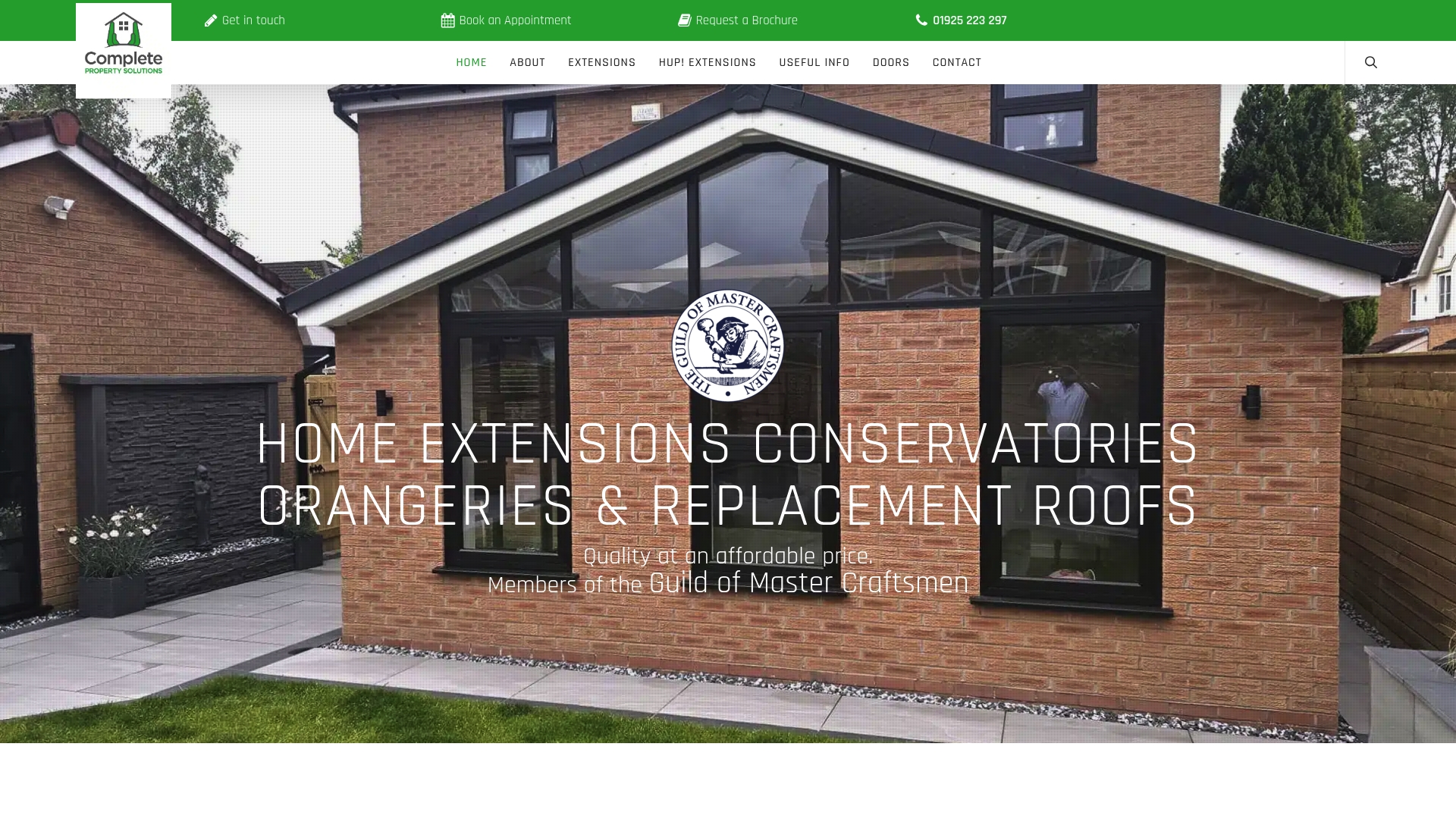
Whether you are replacing an old conservatory or adding a brand new living space, Complete-property provides a fixed-price guarantee and a personalised service from a family-run team with a five-star Google rating. Browse the full range of house extension options or get in touch to arrange a free consultation and site survey. The team will talk you through roof styles, exterior finishes, and glazing choices to help you plan a hup! extension that suits your home and your budget.
FAQ
What is a hup! extension?
A hup! extension is a modular, single-storey home extension built using precision-engineered Ultrapanel wall panels and Ultraframe roofing systems. It meets full building regulation standards and functions as a permanent, fully insulated habitable room.
Are hup! extensions more energy efficient than brick extensions?
Yes. Hup! wall panels achieve U-values as low as 0.17, which is five times more thermally efficient than a standard brick wall. The system also carries a 60% lower carbon footprint than traditional brick-and-block construction.
Do hup! extensions look like traditional builds?
Yes. Exterior finishes including brick slips, render, and timber cladding make the modular construction invisible. A well-specified hup! extension is indistinguishable from a traditionally built room from the outside.
Do hup! extensions need building regulations approval?
Yes. A hup! extension is a permanent habitable room and requires building control approval. Your installer should manage the building regulations process as part of the project.
Can I choose my own roof style for a hup! extension?
Yes. The hup! system offers multiple roof options including Ultraroof tiled roofs, Livinroof hybrid designs, flat roofs with lanterns, and fully glazed roofs, depending on your planning situation and design preferences.


