

A full house renovation is defined as a systematic overhaul of a property’s core infrastructure and interior, going far beyond cosmetic updates to address electrical, plumbing, structural, and thermal systems throughout the entire home. Unlike redecorating a room or replacing a kitchen, a complete home renovation involves gutting walls to the studs, upgrading hidden systems, and bringing every element up to current building standards. The result is a property that is safer, more energy efficient, and significantly more valuable. If you are weighing up whether a full house remodel is right for you, understanding the true scope, cost, and process is the best place to start.
What is a full house renovation and what does it include?
A full house renovation is a systematic overhaul of electrical, plumbing, HVAC, and structural integrity, requiring the property to be gutted to the studs so that every major system can be inspected, replaced, or upgraded. This is the industry term for what homeowners often call a full house remodel or complete home renovation. The distinction matters because it sets realistic expectations about disruption, cost, and timescale.
The core components addressed in a full renovation include:
- Electrical rewiring: Replacing outdated consumer units, cabling, and sockets to meet current Part P building regulations
- Plumbing replacement: Upgrading pipework, boilers, and drainage to modern standards
- HVAC upgrades: Installing or replacing heating, ventilation, and air conditioning systems for comfort and efficiency
- Structural work: Removing or reconfiguring walls, reinforcing lintels, and addressing foundation issues
- Insulation, windows, and doors: Improving thermal performance to reduce energy bills and meet current building regulations
- Interior finishes: New flooring, plastering, kitchen and bathroom installations, and decorating throughout
Upgrading the skeleton systems such as wiring, windows, and structural elements delivers better long-term return on investment than surface-level cosmetic changes. That is because these improvements raise safety standards, reduce running costs, and add genuine value that buyers and surveyors recognise.
Pro Tip: Before any walls are opened, commission a full structural survey and an electrical condition report. Both will reveal hidden problems early and prevent expensive surprises mid-project.
How does the home renovation process work?
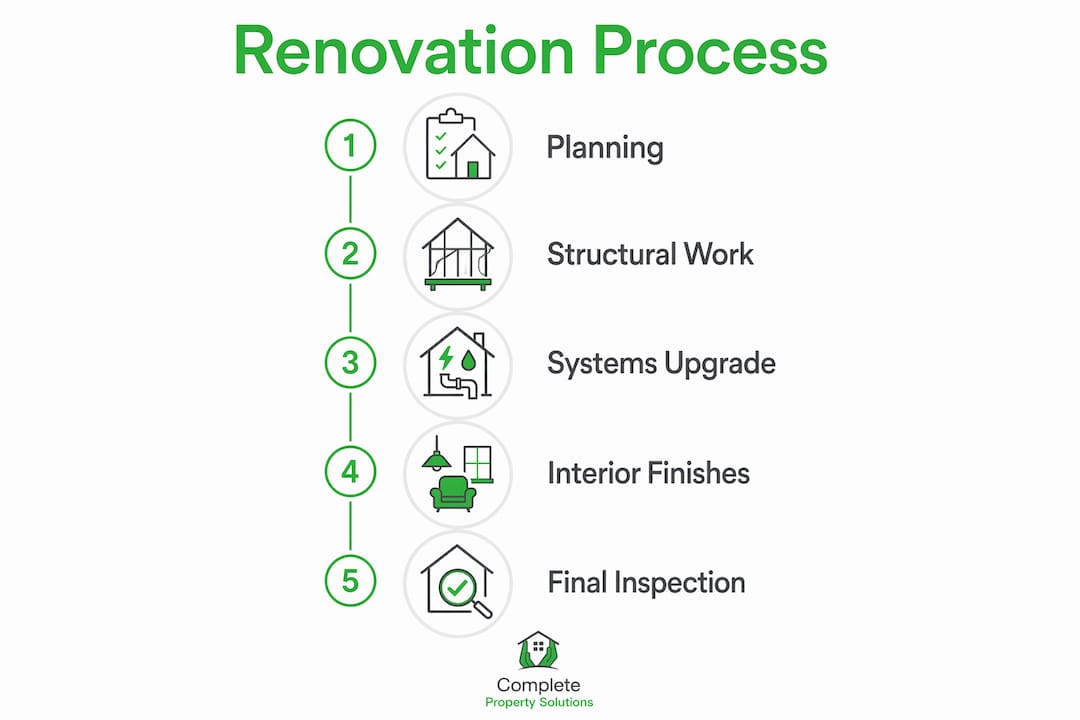
The home renovation process follows a strict, ordered lifecycle. Improper sequencing increases budget overruns by 5–10%, which on a large project can mean tens of thousands of pounds of avoidable cost. Getting the order right is not a preference. It is a financial necessity.
A well-managed full house renovation follows these stages:
- Goal setting and survey: Define the scope, identify structural issues, and set a realistic budget including a contingency fund.
- Design and specification: Finalise floor plans, material choices, and technical drawings before any work begins.
- Permitting and building regulations approval: Submit plans to your local authority and obtain the necessary consents. Check planning permission requirements early, as some structural changes require full planning consent rather than permitted development.
- Demolition: Strip back the property to the agreed extent, removing old finishes, fittings, and any walls scheduled for removal.
- Rough-in work (MEP): Mechanical, electrical, and plumbing trades work in sequence. Trades must be sequenced carefully, with rough-in plumbing completed before HVAC ducting to avoid costly conflicts.
- Inspections: Building control officers inspect electrical, plumbing, and insulation work before walls are closed. Closing walls without inspection approval risks costly tear-outs worth thousands of pounds.
- First fix and insulation: Boarding, insulating, and plastering once all inspections are passed.
- Second fix and finishes: Fitting sockets, switches, sanitaryware, kitchen units, flooring, and decoration.
- Final inspection and sign-off: Building control issues a completion certificate, which is required for future sales and mortgage purposes.
Pro Tip: Build a critical path schedule with your contractor before work starts. Identify which trades are dependent on others and add buffer days between each phase. This single step prevents the most common cause of delays.
A full renovation of a typical three-bedroom semi-detached property takes four to eight months from start to completion, depending on scope and the availability of trades. Homeowners who treat the renovation stages checklist as a living document, updated weekly, stay in control of progress and budget far more effectively than those who rely on verbal updates alone.
How much does a full house renovation cost?
The cost of home renovation at a whole-house level varies considerably based on scope, finishes, and structural complexity. Costs generally span £15 to £150 per square foot depending on the level of work involved. A mid-range whole-home remodel of a 2,000 square foot property averages around £200,000, while gutting a home to the studs typically costs between £100,000 and £300,000.
The table below shows typical cost bands for different levels of renovation work:
| Scope of work | Approximate cost per sq ft | Typical total (2,000 sq ft) |
|---|---|---|
| Cosmetic only (decorating, flooring) | £15–£30 | £30,000–£60,000 |
| Mid-range (kitchens, bathrooms, windows) | £50–£100 | £100,000–£200,000 |
| Full gut and structural renovation | £100–£200+ | £200,000–£400,000+ |
Labour accounts for 50–60% of the total budget on most full renovations. That figure is higher than most homeowners expect, and it explains why cutting corners on contractor selection is so costly in the long run.
Key factors that affect the final cost include:
- Structural complexity: Removing load-bearing walls, underpinning foundations, or reconfiguring layouts adds significant cost
- Specification of finishes: Bespoke joinery, stone worktops, and underfloor heating push costs toward the upper end of each band
- Condition of existing systems: Older properties often conceal water damage, asbestos, or deteriorated wiring that only becomes visible once walls are opened
- Contractor rates: Rates vary by region and by the experience level of the trades involved
A contingency fund of 15–20% is not optional on a full renovation. It is the financial buffer that keeps a project moving when unforeseen issues arise, and they almost always do. On a £200,000 project, that means setting aside £30,000–£40,000 before work starts.
Phasing the work room by room reduces upfront cost but extends disruption and often costs more overall. Trades mobilise multiple times, scaffolding goes up and comes down repeatedly, and coordination becomes harder. A single, well-planned full renovation is almost always more cost-effective than a series of partial projects spread over years.
What are the common challenges in a full house remodel?
Scope creep is the greatest risk in any full house remodel. Mid-project changes to layouts, materials, or specifications trigger permit re-filings, delay trades, and push costs well beyond the original budget. Finalising every design decision before work starts is the single most effective way to protect both your timeline and your budget.
“A renovation is a unified project where every design decision impacts major systems. Change one thing and you often change everything downstream.” This is why experienced builders insist on a fully signed-off specification before demolition begins.
Other frequent challenges include:
- Insufficient contingency: Homeowners who budget tightly with no reserve are forced to pause work or reduce specification when hidden problems emerge
- Skipping inspections: Passing municipal inspections on electrical, plumbing, and insulation before closing walls is a legal requirement, not a formality. Skipping this step means tearing out finished work later
- Poor trade coordination: When electricians, plumbers, and HVAC engineers are not scheduled in the correct order, each trade creates obstacles for the next, causing delays that compound quickly
- Prioritising aesthetics over infrastructure: Spending heavily on finishes while deferring electrical or insulation upgrades produces a property that looks good but performs poorly and costs more to run
The upgrades that add the most lasting value are the ones you cannot see once the walls are closed. Investing in structural improvements and energy efficiency pays dividends in lower bills, better comfort, and stronger resale value for years after the project completes.
Key takeaways
A full house renovation delivers lasting value only when the correct sequence of structural, mechanical, and finishing work is followed, with a realistic budget and a locked-down specification before work begins.
| Point | Details |
|---|---|
| Define the scope clearly | A full renovation covers electrical, plumbing, HVAC, structural, and interior finishes throughout the whole property. |
| Follow the correct sequence | Rough-in trades must complete and pass inspection before walls are closed to avoid costly rework. |
| Budget for contingency | Set aside 15–20% of the total budget to cover unforeseen structural or system issues. |
| Lock down the design first | Finalising all specifications before work starts prevents scope creep and permit delays. |
| Prioritise infrastructure | Upgrading wiring, insulation, and structure adds more long-term value than cosmetic finishes alone. |
Gareth’s view: what I have learned from full house renovations
After more than 35 years working on properties across Warrington, Wigan, and the surrounding areas, the pattern I see most often is homeowners underestimating the infrastructure and overinvesting in the finish. They spend heavily on a beautiful kitchen but leave the wiring untouched, or they fit new windows without addressing the wall insulation behind them. The result is a property that looks renovated but performs like the original.
The sequencing point is one I feel strongly about. I have seen projects where a plumber and an electrician were booked to work simultaneously in the same wall cavity, with no coordination between them. The result was three weeks of delays and a bill for remedial work that nobody had budgeted for. A proper critical path, agreed before the first wall comes down, is worth more than any individual trade you hire.
My honest advice is to invest in the things you cannot see first. Get the wiring right. Get the insulation right. Get the structure right. Then spend on finishes. A home that is warm, safe, and dry will always be worth more than one that is beautifully decorated but fundamentally compromised underneath.
The lifestyle impact during a full renovation is also something homeowners consistently underestimate. Living on site during a gut renovation is genuinely difficult. If you can arrange alternative accommodation for the roughest phases, particularly demolition and rough-in, your wellbeing and your decision-making will both benefit. Good decisions made from a calm position save money. Reactive decisions made under stress cost it.
— Gareth
Planning a full renovation? Complete-property can help
Complete-property has been helping homeowners across Warrington, St Helens, Wigan, and surrounding areas plan and deliver high-quality structural projects for over 35 years. Whether you are considering a house extension as part of a wider renovation or need expert guidance on building regulations compliance, the team brings bespoke planning and transparent fixed-price guarantees to every project.

As a family-run business with a five-star Google rating, Complete-property takes the time to understand exactly what you want to achieve before any work begins. That means fewer surprises, better coordination, and a finished result you will be genuinely proud of. Get in touch with the team today to discuss your project and take the first step with confidence.
FAQ
What is the difference between a renovation and a refurbishment?
A renovation involves structural and system upgrades throughout the property, while a refurbishment typically refers to cosmetic updates such as redecorating or replacing fittings without altering the building’s structure or infrastructure.
How long does a full house renovation take?
A full renovation of a typical three-bedroom property takes four to eight months, depending on the scope of structural work, the availability of trades, and the speed of building control inspections.
Do I need planning permission for a full house renovation?
Most internal renovations do not require planning permission, but structural changes, extensions, or alterations to the external appearance of the property may require consent. Always check with your local authority before work begins.
What is the biggest hidden cost in a full house remodel?
Labour is the largest single cost, accounting for 50–60% of the total budget. Hidden structural issues such as water damage, deteriorated wiring, or asbestos discovered once walls are opened are the most common source of unplanned additional expenditure.
Is a full home restoration worth the investment?
A well-executed full home restoration increases property value, reduces energy bills, and improves safety and comfort significantly. Prioritising infrastructure upgrades over cosmetic finishes delivers the strongest long-term return on investment.


