

Building regulations approval is mandatory for every garage conversion that creates habitable living space. This is not optional, and no planning permission status changes that fact. The moment your garage becomes a room people live, sleep, or work in, it legally triggers compliance with the Building Regulations 2010 and its associated Approved Documents. Understanding what building regulations apply to garage conversions protects you from costly mistakes, failed property sales, and genuine safety risks. This guide covers every compliance area you need to know, from fire safety and thermal performance to ventilation and electrical standards, and explains exactly when planning permission also comes into play.
What building regulations apply to garage conversions?
Building regulations approval is required because a garage was never designed for human habitation. The legal trigger is the change of use from non-habitable storage to habitable living space. That single change means the space must now meet the same safety, energy, and structural standards as any other room in your home.
The relevant Approved Documents cover the following areas:
- Part A (Structure): The existing garage structure must be assessed. Lintels, foundations, and load-bearing walls must be adequate for habitable use.
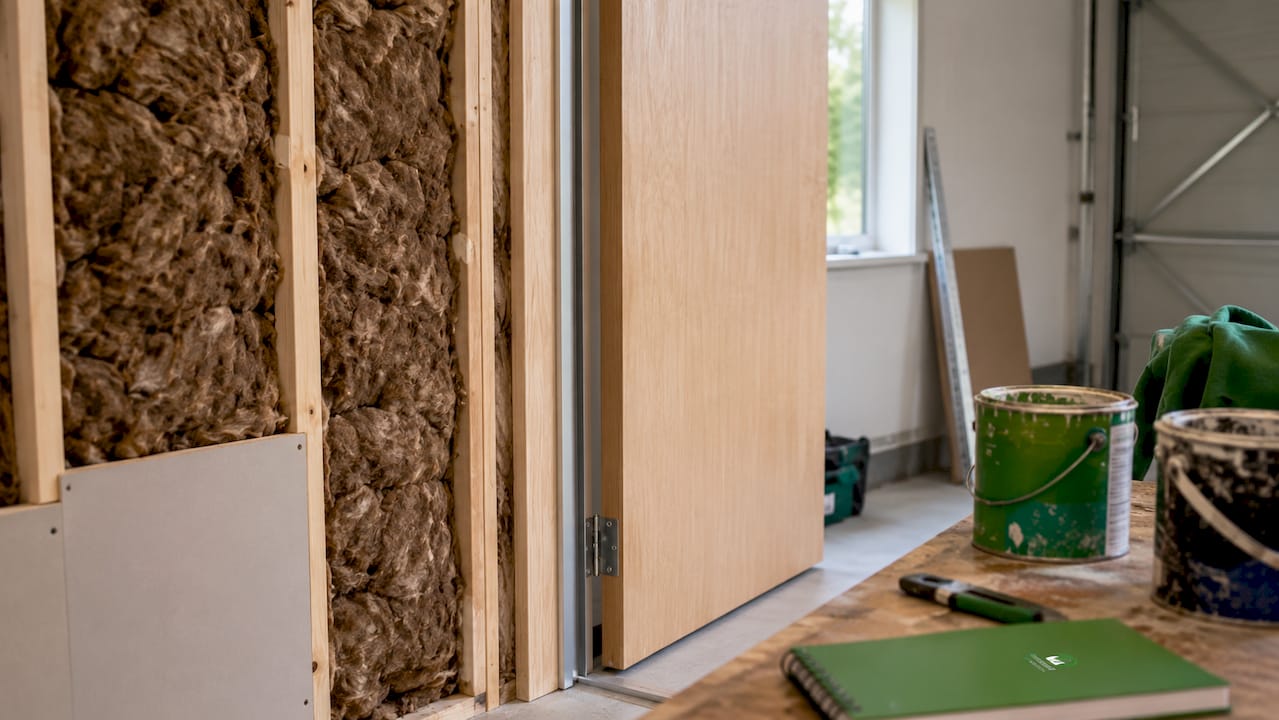
- Part B (Fire safety): An FD30 fire door with a self-closing device and intumescent strips is required between the converted garage and the main dwelling. This is one of the most commonly overlooked requirements.
- Part C (Moisture resistance): A continuous damp-proof membrane must link correctly to the existing structure. A poorly linked membrane causes rising damp within months of completion.
- Part E (Sound insulation): Where the conversion adjoins another property or internal room, sound insulation standards must be met.
- Part F (Ventilation): Habitable rooms require background ventilation via trickle vents and, where applicable, mechanical extraction for kitchens or bathrooms.
- Part L (Thermal performance): Walls must achieve a U-value of 0.28 W/m²K and floors 0.22 W/m²K. PIR insulation boards are the most common way to meet Part L1B targets.
- Part P (Electrical safety): All new circuits, lighting, and heating controls must be completed by a Part P competent electrician and notified to building control.
The requirements differ slightly depending on whether your garage is integral (attached to the house) or detached. An integral garage shares walls with the main dwelling, so fire separation and thermal bridging at junctions are more critical. A detached garage conversion requires its own drainage, electrical supply route, and potentially a separate heating system.
Pro Tip: Thermal performance is where many conversions fall short. Always specify the insulation thickness needed to hit the required U-values before work starts, not after the walls are boarded.
!
How do building regulations differ from planning permission?
Homeowners frequently confuse planning permission with building regulations approval. They are entirely separate processes with different purposes and different triggers.
Planning permission is about land use and external appearance. Building regulations approval is about structural safety, fire protection, energy efficiency, and health standards. You can need one, both, or only building regulations approval, depending on your specific project.
For most internal garage conversions, planning permission is not required. Permitted development rights allow you to change the use of a garage to habitable space without applying to your local planning authority, provided the external appearance of the property does not change significantly. Planning permission becomes necessary when:
- You add new windows or doors that alter the street view of the property
- You change the roofline or add a dormer
- The property is in a conservation area or subject to an Article 4 Direction, which removes permitted development rights
- The conversion involves a structural enlargement that extends beyond the original footprint
Building regulations approval, by contrast, is never optional regardless of planning permission status. Even if your conversion is entirely internal and requires no planning permission at all, you must still submit either a Building Notice or Full Plans application to your local authority building control or an approved inspector.
Skipping building regulations approval creates serious problems. You risk stop-work orders, fines, and a conversion that cannot legally be described as habitable space. When you come to sell your property, solicitors and mortgage lenders will ask for the completion certificate. Without it, your sale can collapse or your buyer’s lender may refuse to finance the purchase.
What are the approval routes for building regulations compliance?
There are two main routes for obtaining building regulations approval, and choosing the right one matters.
- Full Plans submission. You submit detailed architectural drawings and specifications to building control before work begins. The inspector reviews and approves the plans in advance. This route takes longer to start but gives you certainty. If the plans are approved, you know the design meets regulations before a single brick is laid. For structural work, fire separation, and insulation specifications, Full Plans is the recommended route.
- Building Notice. You notify building control that work is about to start, without submitting full drawings. Work can begin more quickly, but the inspector assesses compliance during site visits. The risk is significant. A Building Notice without full plans can result in mid-project rejection of key elements such as fire separation or structural lintels, requiring costly demolition or correction.
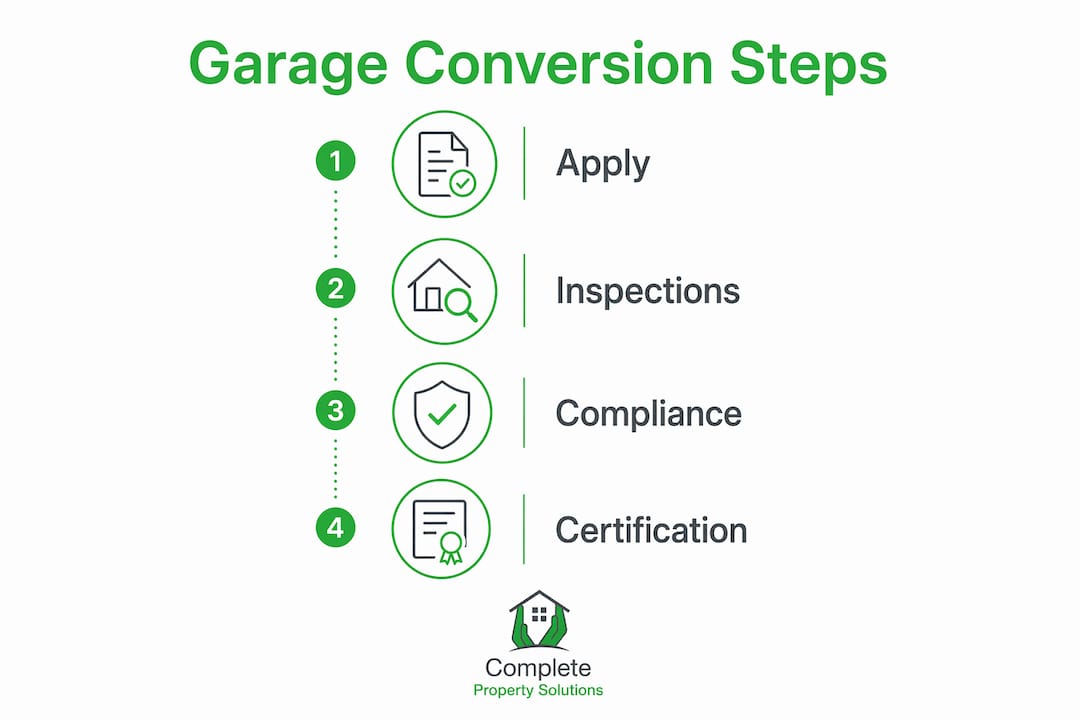
The practical steps for compliance are as follows:
- Appoint a qualified designer or architect to prepare drawings that address all relevant Approved Documents.
- Submit your chosen application (Full Plans or Building Notice) to your local authority building control or an approved private inspector.
- Receive confirmation of your application and agree an inspection schedule.
- Carry out structural work, damp-proofing, and insulation under inspection.
- Have your Part P electrician complete and certify all electrical work.
- Book a final inspection to receive your completion certificate.
Fees vary by local authority but typically cover the application and a set number of site inspections. Budget for this as part of your overall project cost. Timelines for Full Plans approval are generally four to five weeks, though complex projects may take longer.
Pro Tip: Engage your local building control officer early, even before you appoint a builder. They will tell you exactly what they expect to see on site and can prevent expensive surprises later.
!
What are the consequences of ignoring garage conversion regulations?
Non-compliance with garage conversion rules carries real financial and legal consequences. The risks are not theoretical.
- Stop-work orders and fines. Local authorities can issue enforcement notices requiring work to stop. Fines for unpermitted construction work can be substantial, and you may be required to restore the space to its original condition at your own expense.
- Property sale complications. Unapproved conversions rank as the highest risk for property transactions. Solicitors routinely request completion certificates, and mortgage lenders will refuse to finance a purchase where building regulations approval is missing.
- Safety hazards. Without proper fire separation, a fire in the converted room can spread to the rest of the house far more quickly. Inadequate ventilation leads to condensation, mould, and poor air quality. Poor damp-proofing causes structural damage that worsens over time.
- Mortgage refusal. Lenders treat unapproved habitable space as a liability. Some will reduce the property valuation or decline the mortgage application entirely.
The most common mistakes homeowners make are:
- Omitting the FD30 fire door between the garage and the main house
- Failing to connect the damp-proof membrane correctly to the existing floor slab
- Using insufficient insulation and missing the required U-values
- Ignoring ventilation requirements for the new habitable room
- Using an unqualified electrician and failing to notify building control of the electrical work
The good news is that all of these are entirely avoidable with proper planning and the right professional team. Thorough documentation at every stage, including photographs of insulation and membrane installation before boarding, gives you clear evidence of compliance if questions arise later.
Key takeaways
Building regulations approval is non-negotiable for every garage conversion that creates habitable space, covering fire safety, thermal performance, ventilation, structural integrity, and electrical safety.
| Point | Details |
|---|---|
| Building regs always apply | Every garage conversion to habitable space requires building regulations approval, without exception. |
| Fire door is mandatory | An FD30 fire door with intumescent strips and a self-closer must separate the garage from the main dwelling. |
| U-values must be met | Walls need 0.28 W/m²K and floors 0.22 W/m²K to comply with Part L thermal performance standards. |
| Full Plans reduces risk | Submitting Full Plans before work starts prevents costly mid-project corrections and gives design certainty. |
| Missing approval affects sales | No completion certificate means mortgage lenders can refuse to finance a buyer, stalling or collapsing your sale. |
Gareth’s take: what I’ve learned from years of garage conversions
The single biggest misconception I encounter is homeowners believing that because they do not need planning permission, they do not need to do anything officially. That is simply wrong. Building regulations approval is required every single time, full stop.
The details that catch people out most often are the fire door, the damp-proof membrane junction, and the electrical notification. These are not glamorous parts of a conversion, but they are the parts that building control inspectors look at first. Get them right, document them with photographs, and your final inspection becomes straightforward.
A compliant conversion also adds genuine, demonstrable value to your property. When you sell, your solicitor can produce the completion certificate, your buyer’s lender is satisfied, and the transaction proceeds smoothly. That peace of mind is worth every penny of doing it properly. You can explore garage conversion room ideas once you have the compliance foundations in place.
— Gareth
Complete-property can handle your garage conversion compliance
Complete-property has over 35 years of experience delivering compliant garage conversions across Warrington, St Helens, Wigan, and the surrounding areas. The team manages the entire process, from initial design and building regulations applications through to construction and final inspection sign-off.
Every project comes with a fixed-price guarantee and full transparency at every stage. Complete-property handles the paperwork, liaises with building control, and ensures your conversion meets every requirement under the Approved Documents. You get a finished room that is safe, warm, and legally habitable. To find out what your garage conversion could look like and what it will cost, visit the garage conversions page and get in touch with the team today.
!
FAQ
Is building regulations approval always needed for a garage conversion?
Building regulations approval is mandatory for any garage conversion that creates habitable living space. The only possible exception is a non-habitable storage conversion, but approval is still advisable to confirm.
Do I need planning permission for a garage conversion?
Planning permission is generally not required for internal garage conversions that do not alter the street view of the property. You will need it if you add new windows, change the roofline, or if your property is in a conservation area.
What fire safety requirements apply to a garage conversion?
An FD30 fire door with intumescent strips and a self-closing device is required between the converted garage and the main dwelling. This is a legal requirement under Part B of the Building Regulations.
What happens if I sell a house with an unapproved garage conversion?
Unapproved conversions create serious complications during property sales. Mortgage lenders can refuse to finance the purchase, and solicitors will flag the missing completion certificate, which can delay or collapse the transaction entirely.
What is the difference between a Full Plans application and a Building Notice?
A Full Plans application involves submitting detailed drawings for pre-approval before work starts, reducing the risk of costly corrections. A Building Notice allows work to begin sooner but relies on site inspections, which can result in expensive rework if elements are rejected mid-project.


