

A rear extension is defined as a fully integrated structure built onto the back of your home, creating a permanent, habitable room. A conservatory roof replacement, by contrast, upgrades the existing roof covering on a conservatory you already own. The question of which is better depends on your budget, the condition of your existing structure, and how you want to use the space. A rear extension delivers superior thermal performance, long-term value, and fully integrated living space. A roof replacement offers a faster, more affordable comfort upgrade when your conservatory frame and foundations are genuinely sound.
How do costs and timelines compare?
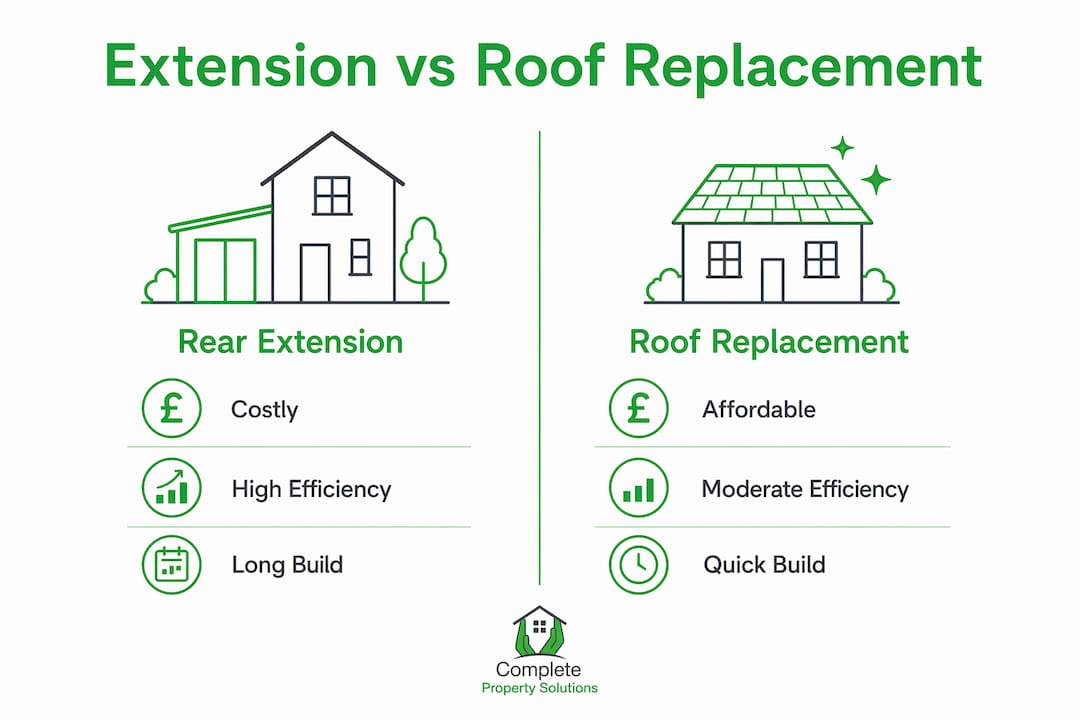
The cost difference between the two options is significant. A conservatory roof replacement costs between £10,500 and £19,500, while a full rear extension typically ranges from £30,000 to £60,000 or more. That gap reflects the scale of work involved, not simply materials.
A roof replacement takes just 3–7 days to complete with minimal disruption to your household. A rear extension takes 3–5 months, with scaffolding, groundworks, and structural work affecting your daily routine throughout. For families who cannot face months of building work, the roof replacement route is genuinely appealing.
That said, the savings on a roof replacement only hold if your existing frame and foundations are structurally sound. If they are not, you may face a full rebuild within a few years, which wipes out any initial saving. Always factor in a structural survey before committing to either route.
Pro Tip: Get a structural survey of your conservatory frame before requesting any roof replacement quotes. A survey costing a few hundred pounds could save you thousands if it reveals foundation or frame problems that make a replacement roof unviable.
| Factor | Roof replacement | Rear extension |
|---|---|---|
| Typical cost | £10,500–£19,500 | £30,000–£60,000+ |
| Completion time | 3–7 days | 3–5 months |
| Disruption level | Minimal | Significant |
| Increases floor space | No | Yes |
What are the functional and thermal performance differences?
Extensions outperform conservatories on thermal efficiency by a considerable margin. A well-built rear extension achieves U-values of around 0.11–0.15 W/m²K for walls, floors, and roofs. Triple-glazed windows, by comparison, achieve around 0.7 W/m²K. The lower the U-value, the better the insulation, so an extension retains heat far more effectively than even an upgraded conservatory.
A conservatory with a new solid roof will feel noticeably warmer in winter and cooler in summer than one with a polycarbonate or glass roof. However, it still cannot match the thermal performance of a properly insulated extension. The walls and floor of a conservatory are rarely built to the same standard as a main home, which limits how comfortable the space can be year-round.
Extensions also integrate directly into your home’s heating system. You can run radiators or underfloor heating through the new room without the temperature swings that affect conservatories. Maintenance is lower too: conservatories require regular cleaning of glazing, gutters, and frames, while a brick or block extension needs far less ongoing attention.
Key functional differences at a glance:
- Extensions provide year-round, fully habitable rooms at consistent temperatures.
- Conservatories, even with a solid roof, remain seasonal spaces in most UK climates.
- Extensions connect to your existing heating system without modification.
- A new conservatory roof reduces glare and heat loss but does not resolve wall or floor insulation shortfalls.
- Solid roof options improve conservatory comfort meaningfully but cannot replicate extension-grade insulation.
What structural considerations affect the choice?
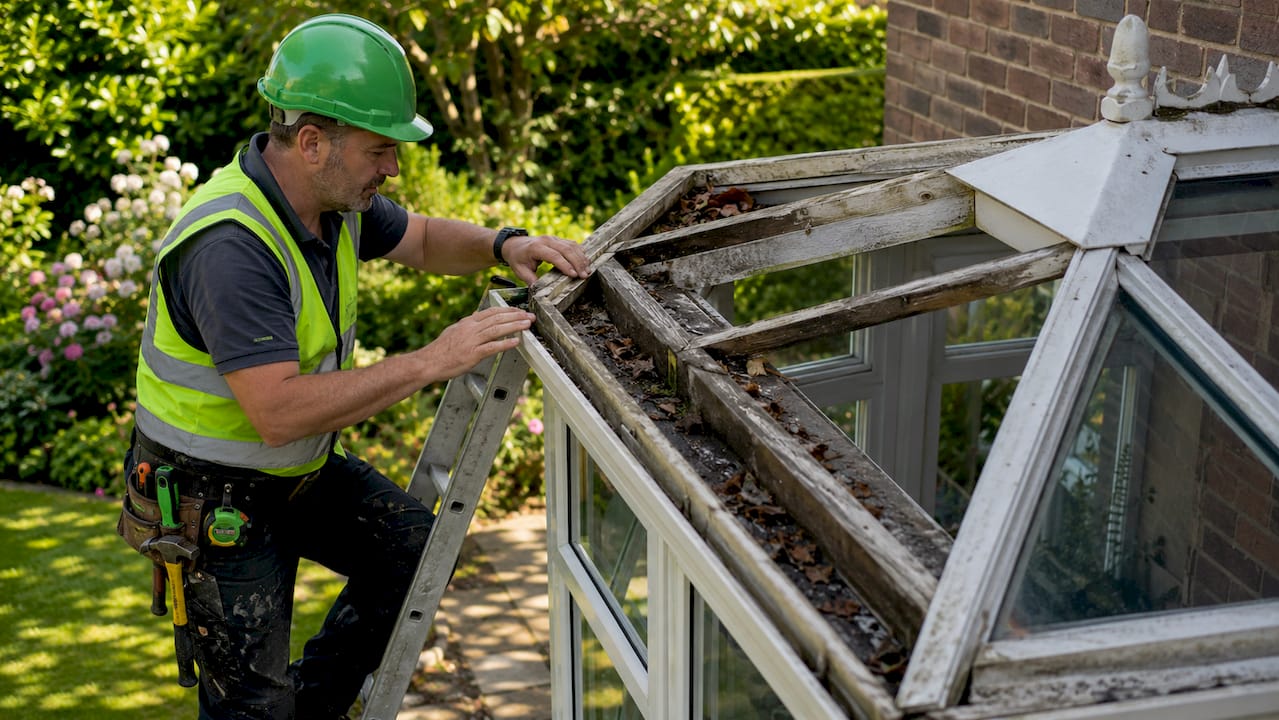
Structural integrity is the most overlooked factor in this decision. When replacing a conservatory roof, the old roof joists, ring beam, and crest must be completely removed. Placing new tiles or a solid roof covering directly over the existing framework is not acceptable practice. The original structure was not engineered to carry the additional weight of a heavier roof, and leaving it in place risks frame distortion, cracking, and eventual failure.
Replacing only the roof without removing the old framework risks structural failure because older frames were not built for heavier tiled roofs. Full removal is the only way to guarantee durability. Any builder who suggests simply overlaying tiles onto an existing polycarbonate or glass roof frame should be questioned carefully.
There are also legal considerations that homeowners frequently miss. Removing the door between a conservatory and the main house legally converts the conservatory into an extension, triggering full Building Regulations compliance. That means the structure must meet current standards for insulation, ventilation, fire safety, and structural loading. Failing to comply creates problems when you sell.
Follow this process before committing to a roof replacement:
- Commission a structural survey of the conservatory frame and foundations.
- Confirm the frame was built post-2005 to modern standards.
- Establish that the foundations can carry the weight of a solid roof.
- Confirm the full old roof structure will be removed before the new one is installed.
- Check whether any planned changes trigger building regulations compliance.
Pro Tip: Ask your builder to confirm in writing that the old roof joists, ring beam, and crest will be fully removed before installation begins. This protects you structurally and legally.
How do rear extensions improve home living and add value?
A rear extension does more than add square footage. Well-designed rear extensions improve home layout by creating open-plan, light-filled spaces that connect the kitchen and garden, enhancing family living and adding 5–10% to property value. That figure represents real financial return, not just lifestyle improvement.
Architects consistently emphasise designing extensions around how you actually live rather than simply chasing floor area. A well-planned rear kitchen extension that removes a bottleneck between the kitchen and garden delivers more daily value than a larger room with poor flow. Early-stage planning for natural light and structural elements avoids expensive alterations later and improves the overall living experience.
Popular features in rear extensions include:
- Flat roofs with rooflights, which maximise natural light and suit most house types.
- Bi-fold or sliding doors that open the room directly onto the garden.
- Open-plan kitchen and dining layouts that improve family flow.
- Underfloor heating integrated from the outset for year-round comfort.
- Structural steels positioned early to allow large openings without costly retrofits.
| Extension feature | Benefit |
|---|---|
| Rooflights | Maximises daylight without sacrificing privacy |
| Bi-fold doors | Connects indoor and outdoor living |
| Open-plan layout | Removes bottlenecks and improves daily flow |
| Underfloor heating | Provides consistent warmth at lower running costs |
| Proper planning compliance | Protects resale value and avoids legal issues |
Compliance with planning and building regulations is not optional. Extensions built without proper approval create serious problems at the point of sale. Complete-property handles home extension planning from the outset, so homeowners avoid these pitfalls entirely.
When should you choose a roof replacement over a rear extension?
A conservatory roof replacement is the right choice in specific circumstances. It is not a compromise: for the right home and the right budget, it is the most practical decision available.
Choose a roof replacement when:
- Your conservatory was built post-2005 and the frame and foundations are confirmed as structurally sound.
- Your budget is under £20,000 and you need a meaningful comfort improvement quickly.
- You are happy with the existing floor space and simply want the room to be usable year-round.
- You cannot accommodate 3–5 months of building work at home.
- You want a quick, low-disruption upgrade before selling or renting the property.
Do not choose a roof replacement when:
- Your conservatory frame shows signs of bowing, cracking, or settlement.
- You want to remove the internal door and integrate the space fully with your home.
- You need more floor space, not just a more comfortable existing room.
- Your foundations were not designed to carry a solid tiled roof.
The replacement conservatory roofs service from Complete-property covers all the structural checks and full removal of the old roof framework as standard. That approach protects homeowners from the most common and costly mistakes in this type of project.
Key takeaways
A rear extension delivers better long-term value, thermal performance, and fully integrated living space, while a conservatory roof replacement offers a faster, more affordable comfort upgrade for structurally sound existing frames.
| Point | Details |
|---|---|
| Cost difference is substantial | Roof replacements cost £10,500–£19,500; extensions cost £30,000–£60,000 or more. |
| Full structural removal is non-negotiable | Old roof joists, ring beam, and crest must be completely removed before any new roof is installed. |
| Extensions outperform on thermal efficiency | Extension U-values of 0.11–0.15 W/m²K far exceed what a conservatory can achieve. |
| Legal compliance triggers matter | Removing the internal door converts a conservatory into an extension, requiring full Building Regulations sign-off. |
| Extensions add measurable property value | A well-designed rear extension can add 5–10% to your home’s value. |
Gareth’s view: the question most homeowners ask too late
Most homeowners come to me having already decided they want a roof replacement because it is cheaper. That is a reasonable starting point. What they have not done is check whether their conservatory frame can actually support one.
The structural survey is the step that gets skipped. I have seen frames that look perfectly fine from the outside but are sitting on shallow foundations that were never designed for a solid roof. Putting a tiled roof on top of that is not a saving. It is a problem deferred by two or three years.
My honest advice is this: if your conservatory was built before 2005, treat the structural survey as mandatory, not optional. If the frame passes, a roof replacement is a genuinely good investment. If it does not, you are better off knowing now and planning a proper extension rather than spending £10,000 on a roof that creates more problems than it solves.
The other thing I see regularly is homeowners underestimating how much they will want to use the space once it is improved. A roof replacement makes a conservatory comfortable. An extension makes it part of your home. Those are different things, and it is worth being honest with yourself about which one you actually want before you commit.
— Gareth
How Complete-property can help you decide
Choosing between a rear extension and a conservatory roof replacement is a significant decision, and getting the structural and planning details right from the start makes all the difference to the finished result.
Complete-property has over 35 years of experience helping homeowners across Warrington, St Helens, Wigan, and surrounding areas make exactly this kind of decision. Whether you are exploring house extensions or looking at replacement conservatory roofs, the team provides honest, fixed-price guidance from the first conversation through to completion. Every project includes a thorough structural assessment so you know exactly what you are getting before any work begins. Get in touch to discuss your options with a team that genuinely cares about getting it right for you.
FAQ
How much does a conservatory roof replacement cost in the UK?
A conservatory roof replacement costs between £10,500 and £19,500 depending on size, materials, and structural condition. This is significantly less than a full rear extension, which typically starts at £30,000.
Does a new conservatory roof add value to my home?
A solid roof replacement improves comfort and kerb appeal, but a well-designed rear extension adds more measurable value, typically 5–10% to property value. The right choice depends on your existing structure and long-term plans.
Do I need building regulations for a conservatory roof replacement?
You may need building regulations approval depending on the scope of work. Removing the internal door between the conservatory and the main house triggers full compliance requirements, converting the space legally into an extension.
Can I just put tiles over my existing conservatory roof?
No. The old roof joists, ring beam, and crest must be fully removed before a new solid roof is installed. The original framework was not engineered to carry the additional weight, and overlaying tiles creates serious structural risk.
How long does a rear extension take to build?
A rear extension typically takes 3–5 months from groundworks to completion. A conservatory roof replacement, by contrast, takes just 5–7 days, making it a much lower-disruption option for occupied homes.


