

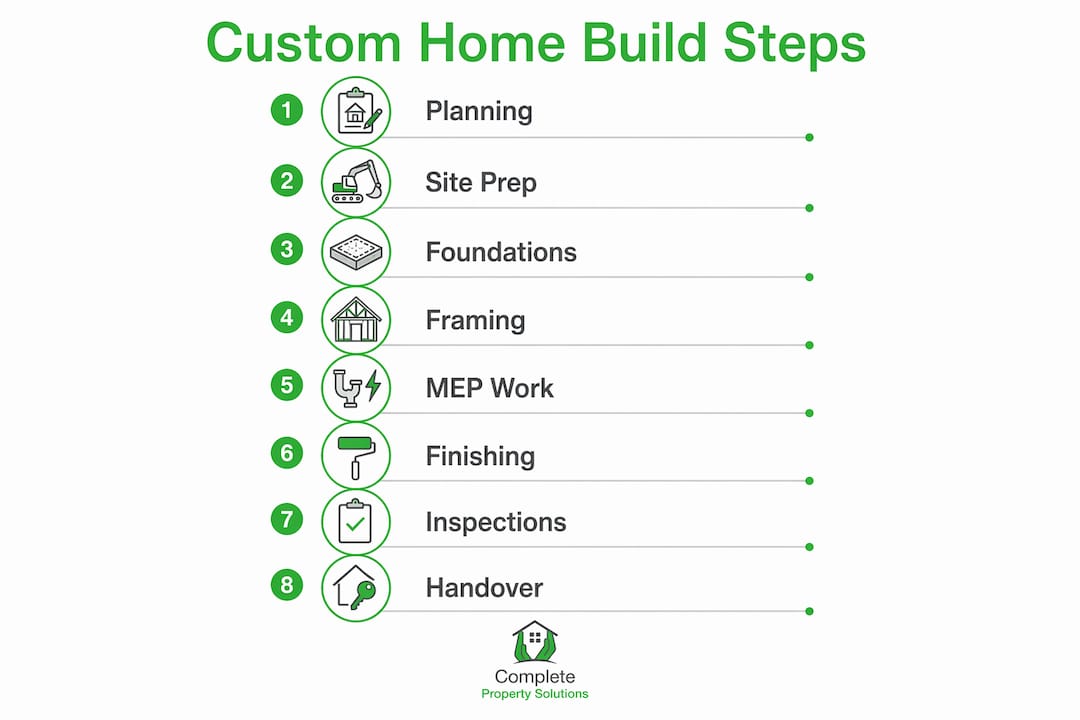
The custom home build process is a structured sequence of phases that takes your vision from an empty plot to a finished, bespoke home. Each phase depends on the one before it, which means skipping steps or rushing decisions creates problems that are expensive to fix later. This guide walks you through every stage, from initial land assessment and planning permission through to foundations, structural work, first and second fix trades, and final handover. Whether you are building in Warrington, Wigan, St Helens, or anywhere across the North West, understanding the full sequence gives you the confidence to make good decisions at every turn.
How to plan and design your custom home build
Good planning is the foundation of every successful custom home build. The design and permitting phase alone typically takes 12–20 weeks, covering architectural drawings, revisions, and local authority approvals. That is a significant chunk of time before a single spade enters the ground, and it is time well spent.

Start with a thorough site assessment
Before you commission any drawings, assess the land itself. Soil type, topography, drainage, and access all affect what you can build and what it will cost. Engaging a builder early during lot evaluation helps identify soil conditions and topography issues that directly influence foundation type and structural budget. A builder who spots a high water table or unstable subsoil at this stage saves you thousands compared to discovering it during excavation.
Key questions to answer before design begins:
- Does the plot have planning history or restrictions?
- What are the ground conditions and drainage requirements?
- Are there overhead cables, underground services, or protected trees?
- What are the local authority’s design expectations for the area?
- Is the access suitable for construction vehicles and deliveries?
Budgeting and planning permission
Set your total budget before you finalise the design. A 10–15% contingency fund is the industry standard for covering unexpected costs and change orders. That means if your build budget is £300,000, you should hold £30,000–£45,000 in reserve. Treating that contingency as already spent is the mindset that protects you.
Planning permission in the UK is handled by your local planning authority. Approval timelines vary by council, but eight weeks is the statutory target for most householder applications. Building Regulations approval is a separate process and covers structural safety, fire protection, insulation, drainage, and ventilation. Both are non-negotiable, and both take time to secure. Factor them into your programme from day one.
Pro Tip: Involve your builder during the design phase, not after it. Separating design from construction risks budget overruns because architectural choices get made without knowing what they actually cost to build.
Skilled builders use permit waiting periods productively. Permit approval waits create unavoidable gaps that experienced teams fill by finalising technical details and scheduling subcontractors. That preparation prevents delays once construction begins.
What happens during site preparation and foundations?
Site preparation is where the build becomes real. It is also where hidden costs most commonly appear. Clearing, soil testing, and excavation can reveal unforeseen ground conditions that significantly change foundation requirements and budget.
Ground preparation steps
The sequence for site preparation follows a fixed order:
- Clear vegetation, topsoil, and any existing structures
- Carry out trial pits or a ground investigation survey
- Set out the building footprint using profiles and string lines
- Excavate to the required depth based on foundation design
- Install drainage runs and service ducts before pouring concrete
Foundation types common in UK custom builds include strip foundations, raft foundations, and pile foundations. Strip foundations suit most standard ground conditions and are the most cost-effective. Raft foundations spread the load across a wider area and work well on softer or variable ground. Pile foundations are used where ground conditions are poor or where the structure is particularly heavy.
Foundation waterproofing is not optional. A damp-proof membrane beneath the slab and cavity drainage systems in basement builds protect the structure for its entire lifespan. Getting this right at the outset costs far less than remedial work later.
Structural framing and roofing
Once foundations are complete, the structural frame goes up. This covers ground floor construction, load-bearing walls, upper floors, and roof trusses. The frame defines the shape and size of every room, so accuracy at this stage matters enormously. Roof sheathing and breathable membrane follow the truss installation, making the building weathertight before internal trades begin.
Pro Tip: Photograph every stage of the structural work before it gets covered up. Those images are invaluable if you ever need to locate a joist, a pipe run, or a structural element during future renovation work.
The entire build process typically spans 14–24 months in total, with physical construction taking 8–14 months. Structural work usually accounts for two to four months of that window, depending on the size and complexity of the build.
MEP installations and interior finishing stages
Mechanical, electrical, and plumbing work, known in the trade as MEP, runs in two distinct phases: first fix and second fix. Getting the sequence right between these phases is what keeps a build on programme.
First fix: the hidden infrastructure
First fix covers everything that gets built into the fabric of the structure before plastering begins. The order matters because trades need to work in sequence without blocking each other.
- Plumber installs soil pipes, waste runs, and cold water supply pipework
- Electrician runs cable routes, back boxes, and consumer unit position
- HVAC contractor installs ductwork, flue runs, and underfloor heating pipes
- Insulation is fitted between joists and within stud walls
- Building control inspection takes place before walls are closed up
Each of these inspections is a legal requirement under Building Regulations. Missing one means opening walls back up, which costs time and money.
Second fix: turning a shell into a home
Second fix begins after plastering is complete and the building has dried out sufficiently. This phase transforms the raw shell into a liveable space.
- Electrician fits sockets, switches, light fittings, and consumer unit
- Plumber installs sanitaryware, radiators, and kitchen connections
- Joiner fits staircases, skirting boards, architraves, and internal doors
- Kitchen and bathroom units are installed and tiled
- Flooring is laid throughout, followed by decoration
Late decisions on material selections are one of the most common causes of delay at this stage. If your kitchen is not ordered until second fix begins, you will wait six to ten weeks for delivery while your builder stands idle. A custom home selections guide can help you understand exactly when each choice needs to be made to keep the programme moving.
Pro Tip: Walk the site with your builder at the end of first fix, before plastering. That is your last chance to add a socket, move a light position, or adjust a pipe run without significant cost.
What happens at final inspections and handover?
The closing stages of a custom home build require the same attention to detail as the early ones. Rushing the finish is where many homeowners later find regret.
Snagging and final inspections
A snagging survey identifies defects or incomplete items before you take possession. Common snagging items include:
- Paint misses and uneven finishes on walls and ceilings
- Doors or windows that do not close or seal correctly
- Grout lines that are cracked or inconsistent
- Switches or sockets that are not flush or level
- External drainage that has not been tested under load
Building control will carry out a final inspection and issue a completion certificate once all Building Regulations requirements are met. This document is essential. Without it, you will face difficulties when selling the property or remortgaging.
Handover and aftercare
A thorough handover includes a walk-through of every system in the home: heating controls, ventilation, electrical consumer unit, and any smart home technology. You should receive all warranties, guarantees, and instruction manuals at this point. Reputable builders also provide a defects liability period, typically 12 months, during which they return to address any issues that emerge after occupation.
The home extension planning process follows a very similar sequence to a full custom build, which is why experience in extensions translates directly into custom build competence.
Key takeaways
A successful custom home build depends on thorough pre-construction planning, strict phase sequencing, and proactive communication between the homeowner and builder at every stage.
| Point | Details |
|---|---|
| Plan before you build | Design and permitting takes 12–20 weeks; start this phase before any groundwork begins. |
| Budget with a contingency | Hold 10–15% of your total budget in reserve for unexpected costs and change orders. |
| Involve your builder early | Builder input during design prevents costly mismatches between architectural plans and build reality. |
| Sequence MEP carefully | First fix inspections are legally required; missing them means opening finished walls. |
| Snagging protects you | A thorough snagging survey before handover is your best defence against post-move-in problems. |
What I have learned from 35 years of building
After more than three decades managing builds across Warrington, St Helens, Wigan, and the wider North West, the single biggest lesson I can share is this: the homeowners who enjoy the process are the ones who commit to the planning phase with the same energy they bring to choosing their kitchen.
Most people want to get to the exciting parts quickly. I understand that completely. But rushing through design, skipping a proper site investigation, or leaving material selections until the last minute creates a build that costs more and takes longer than it should. The steps in home construction are fixed for a reason. You cannot plaster before first fix is inspected. You cannot tile before the screed has dried. The sequence is not bureaucracy; it is physics.
Change orders are the other thing I would warn you about honestly. Every change you make after construction starts costs roughly three times what it would have cost in the design phase. That is not a figure I invented; it is what I have seen consistently over 35 years. If you are not sure about a decision, make it before the build starts, not during it.
One more thing: document everything with photographs. Take pictures of every pipe run, every cable route, and every structural element before it disappears behind plasterboard. You will thank yourself years later when you want to hang a radiator or run a new cable.
The North West weather also deserves a mention. Builds in this region need to account for wet winters. Good groundwork drainage and a weathertight structure before the cold months arrive will save you significant delays and potential damage.
— Gareth
Complete-Property-Solutions: here to help at every stage
Complete-Property-Solutions has supported homeowners across Warrington, St Helens, Wigan, Rainhill, Great Sankey, Penketh, and the surrounding areas for more than 35 years. The team manages every stage of a build, from initial design and planning permission through to Building Regulations sign-off and final handover.
Whether you are planning a full home extension build or exploring how to add lasting value to your property, Complete-Property-Solutions provides transparent fixed-price quotations, clear communication, and professional project management throughout. As members of the Guild of Master Craftsmen, the team brings genuine craftsmanship to every project. Get in touch for a no-obligation consultation and find out how we can help you build with confidence.
FAQ
How long does a custom home build take?
The full process typically spans 14–24 months, with physical construction taking 8–14 months. Design, planning permission, and Building Regulations approval account for the remainder.
Do I need planning permission for a custom home build in the UK?
Yes. A new custom home requires full planning permission from your local planning authority. Building Regulations approval is also required separately and covers structural, fire, and energy performance standards.
What is a realistic contingency budget for a custom build?
A 10–15% contingency on top of your core build budget is the standard recommendation. On a £350,000 build, that means holding £35,000–£52,500 in reserve for unexpected costs.
What is the difference between first fix and second fix?
First fix covers all the hidden infrastructure, including pipework, cabling, and ductwork, installed before plastering. Second fix covers the visible installations, such as sockets, sanitaryware, and joinery, fitted after plastering is complete.
What is a snagging survey?
A snagging survey is a detailed inspection carried out before you take possession of a new build. It identifies defects, incomplete items, and finish quality issues that the builder must address before handover is finalised.


