

An orangery is a predominantly brick-built home extension combining large windows with a flat roof featuring a central glass lantern, offering both solid structure and abundant natural light. Historically, orangeries were purpose-built garden structures used to shelter orange trees through winter in cooler climates. Today, they have evolved into one of the most desirable home extension types in the UK, sitting neatly between a traditional brick extension and a glass-heavy conservatory. If you are considering adding one to your home, understanding what makes an orangery distinct is the best place to start.
What is an orangery and how is it defined?
An orangery is defined by its construction: a masonry or brick base, large glazed windows, and a flat or pitched roof with a central glazed lantern. This combination is what separates it from both a standard conservatory and a full brick extension. Which? describes orangeries as brick structures with substantial glazing and a central glass lantern roof, and that description captures the essence perfectly.
The term “orangery” is sometimes used loosely by homeowners to describe any light-filled extension. The functional definition, however, centres on specific material ratios and roofing structure. DHW Joinery highlights that many homeowners misapply the term based on appearance alone, when the real distinction lies in glazing ratios and construction method.
Understanding the correct definition matters because it affects planning permissions, building regulations, and the thermal performance you can expect from your new space.
What materials and structural features define an orangery?
The structural identity of an orangery rests on three core elements: a solid brick or masonry base, large windows covering less than 50% of the wall area, and a flat roof with a glazed lantern covering less than 75% of the roof area. These glazing ratio thresholds are what formally separate an orangery from a conservatory in planning and construction terms.
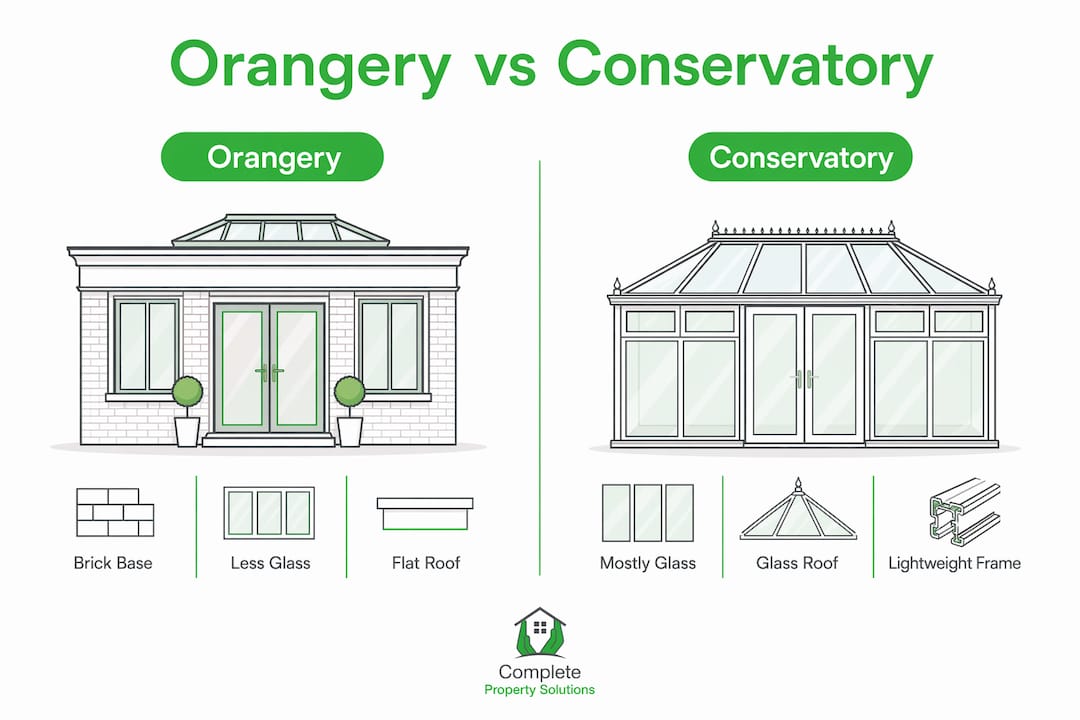
Key structural features of a well-built orangery include:
- Brick or masonry walls forming the main structure, providing thermal mass and insulation
- Large windows, often floor-to-ceiling, positioned to maximise light without exceeding the 50% wall glazing threshold
- A flat or low-pitched solid roof with a central glass lantern bringing daylight into the heart of the room
- Insulated roof construction that performs far closer to a habitable room than a glass roof ever could
- Bi-folding or French doors connecting the orangery to the garden
The solid wall construction gives an orangery genuine insulation value. Unlike a conservatory’s predominantly glazed roof, the flat insulated roof with a lantern retains heat in winter and reduces overheating in summer. Positioning of lanterns and glazing affects heat loss and gain significantly, which is why careful design decisions at the planning stage pay dividends throughout the year.
Pro Tip: Choose a thermally broken aluminium or uPVC lantern frame rather than a standard aluminium one. The difference in heat retention over a typical winter is considerable, and it costs far less than retrofitting insulation later.
How does an orangery differ from a conservatory?
The difference between an orangery and a conservatory comes down to glass ratios, roof design, and how the structure feels to live in. A conservatory is predominantly glazed, with a glass or polycarbonate roof covering most of its surface. An orangery uses solid walls and a solid insulated roof, with glazing used selectively rather than as the primary building material.
| Feature | Orangery | Conservatory | Full extension |
|---|---|---|---|
| Wall construction | Brick or masonry | Mostly glass or uPVC | Brick or masonry |
| Roof type | Flat with glass lantern | Pitched glass or polycarbonate | Tiled or flat |
| Glazing ratio (walls) | Under 50% | Over 75% | Minimal |
| Glazing ratio (roof) | Under 75% | Over 75% | None |
| Year-round usability | Excellent | Limited without upgrades | Excellent |
| Typical cost | Mid to high | Lower | Higher |
| Planning permission | Often permitted development | Often permitted development | More likely required |
A conservatory can feel uncomfortably hot in summer and cold in winter without additional heating and ventilation. An orangery, engineered as a thermal envelope with insulated walls and a lantern roof, performs much closer to a habitable room in energy terms. That distinction makes a real difference to how you use the space day to day.
A full brick extension offers the same thermal performance but typically costs more and requires full planning permission in most cases. Orangeries are usually classed as single-storey extensions under permitted development rights, provided specific conditions are met. That classification simplifies the planning process considerably for most homeowners.
You can read more about conservatory and orangery differences on the Complete-property website if you want a deeper comparison before making a decision.
What are the practical benefits of adding an orangery?
The benefits of an orangery go well beyond aesthetics. The solid wall construction creates genuine usable wall space, which means you can position radiators, shelving, and furniture in ways that a glass-heavy conservatory simply does not allow. Homebuilding quotes experts praising orangeries for their substantial feel and practical usability year-round.
The main practical benefits homeowners consistently report include:
- Year-round comfort thanks to insulated walls and a thermally efficient lantern roof
- Natural light flooding in through the lantern and large windows without the glare and heat of a fully glazed roof
- Flexible use as a dining room, kitchen extension, home office, or living space
- Genuine wall space for furniture, fitted units, and heating
- Strong visual integration with the main house due to matching brickwork and proportions
- Added property value that exceeds what a standard conservatory typically delivers
Orangeries add higher property value than conservatories, according to Axiom Eco Homes, because of their solid build quality and energy performance. Buyers recognise the difference between a room-like orangery and a glass box, and that recognition shows up in valuations. If you want to understand which extensions add the most value, the Complete-property guide on home extensions that add value is worth reading alongside this article.
The roof lantern design also contributes to ventilation. A well-positioned opening lantern draws warm air upward and out in summer, keeping the space comfortable without air conditioning.
What should homeowners consider when planning an orangery?
Planning an orangery well requires decisions on design, materials, regulations, and budget before a single brick is laid. Getting these right from the start avoids costly changes later.
- Match your existing brickwork. The orangery should look like it belongs to the house, not like an afterthought. Source bricks that match your existing exterior as closely as possible. A good builder will help you identify the right match.
- Decide on your glazing placement early. The position of windows and the lantern affects light, heat, and privacy. South-facing glazing brings in the most light but also the most heat. North-facing glazing gives consistent, cooler light. Your builder should model this with you before finalising the design.
- Check your permitted development rights. Most orangeries qualify under permitted development, but restrictions apply if you live in a conservation area, a listed building, or if previous extensions have already used up your permitted development allowance. Building regulations still apply regardless of whether planning permission is needed.
- Set a realistic budget. Orangeries cost more than conservatories due to bespoke brickwork and solid roof construction, but they typically cost less than a full brick extension. The bespoke nature of the build means like-for-like price comparisons are difficult. Always get a fixed-price quote that covers foundations, brickwork, glazing, roofing, and finishing.
- Choose a builder with orangery experience. An orangery is not a standard conservatory installation. It requires skilled bricklayers, knowledge of insulated roof systems, and experience with lantern roof fitting. Ask to see completed projects and check reviews before committing.
Pro Tip: Ask your builder to show you a completed orangery they have built, not just a brochure image. Seeing the quality of brickwork and lantern fitting in person tells you far more than any photograph.
How do orangeries fit into modern UK home extension trends?
Orangeries have seen a strong revival in the UK over the past decade. Homeowners increasingly want extensions that feel like genuine rooms rather than glass annexes bolted onto the back of the house. The orangery’s balance of light and solidity appeals directly to that preference.
Modern orangeries are built to comply fully with current Building Regulations, including Part L on energy efficiency. This means they perform to the same thermal standards as the rest of your home, which was not always the case with older conservatory-style additions. The shift toward thermally efficient extensions has made orangeries a natural choice for homeowners who want the look of a traditional garden room with the performance of a modern living space.
| Extension type | Year-round usability | Typical planning route | Relative cost |
|---|---|---|---|
| Orangery | High | Permitted development (conditions apply) | Mid to high |
| Conservatory | Moderate | Permitted development (conditions apply) | Lower |
| Full brick extension | High | Planning permission often required | Higher |
| Replacement conservatory roof | High (upgrade) | Usually no permission needed | Lower |
The replacement conservatory roof market has also grown significantly, with homeowners upgrading existing conservatories with tiled roofs to achieve orangery-like performance without a full rebuild. That option suits homeowners who already have a conservatory structure in good condition.
Modern orangeries in Cheshire and Lancashire built by Complete-property demonstrate how contemporary design can sit comfortably alongside traditional housing stock, which is particularly relevant for the older housing types common across Warrington, St Helens, and Wigan.
Key takeaways
An orangery is defined by its brick construction, glazing ratios, and lantern roof, making it the most thermally efficient and room-like extension option between a conservatory and a full brick build.
| Point | Details |
|---|---|
| Definition is structural | An orangery requires brick walls, under 50% wall glazing, and a flat roof with a central glass lantern. |
| Glazing ratios matter | Less than 75% roof glazing and less than 50% wall glazing formally distinguish an orangery from a conservatory. |
| Year-round performance | Insulated walls and a lantern roof deliver comfort in all seasons, unlike a standard conservatory. |
| Planning is usually simpler | Most orangeries qualify under permitted development rights, though building regulations always apply. |
| Value exceeds conservatories | Orangeries add more property value than conservatories due to their solid build and energy performance. |
Why an orangery is worth the investment
Having spent over 35 years working on home extensions across Warrington, St Helens, and the surrounding areas, I have seen homeowners make the full range of choices. Some go for the cheapest conservatory they can find. Others invest in a full brick extension. The ones who consistently get the best outcome, in terms of daily enjoyment and long-term value, are the ones who choose an orangery.
What makes the difference is not the aesthetics, though orangeries do look excellent. It is the way the space actually functions. A well-built orangery is warm in january, cool in july, and genuinely useful every day of the year. You can put a sofa in it, a dining table, a kitchen island. You cannot do that comfortably in a glass conservatory without spending a fortune on heating and blinds.
The one thing I would caution against is treating an orangery as a budget option. It costs more than a conservatory for good reason. The brickwork, the insulated roof, the quality lantern frame: these are not areas to cut corners. A poorly built orangery with cheap glazing and inadequate insulation will underperform and disappoint. A properly built one will add genuine value to your home and your daily life for decades.
My honest advice is to be clear about how you intend to use the space before you design it. A dining orangery needs different glazing placement to a home office orangery. Get that conversation right with your builder at the start, and the rest follows naturally.
— Gareth
Planning your orangery with Complete-property
Complete-property has been building bespoke orangeries and house extensions across Warrington, St Helens, Wigan, and the surrounding areas for over 35 years. Every project starts with a personal consultation to understand exactly how you want to use your new space, followed by a fixed-price quote with no hidden costs.
The team handles everything from initial design and planning advice through to brickwork, glazing, lantern roof fitting, and final finishing. As a family-run business with a five-star Google rating, Complete-property brings the same care and attention to every orangery project, whether it is a compact garden room extension or a large open-plan kitchen orangery. Get in touch today for a free, no-obligation consultation and find out what a bespoke orangery could do for your home.
FAQ
What is the definition of an orangery?
An orangery is a brick or masonry home extension with large windows, less than 50% wall glazing, and a flat roof featuring a central glass lantern. It sits structurally between a conservatory and a full brick extension.
What is the main difference between an orangery and a conservatory?
A conservatory is predominantly glazed, with a glass or polycarbonate roof covering most of its surface. An orangery uses solid brick walls and an insulated flat roof with a lantern, giving it far better thermal performance and year-round usability.
Do you need planning permission for an orangery?
Most orangeries qualify under permitted development rights as single-storey extensions, meaning full planning permission is not required. Building regulations still apply, and restrictions exist for listed buildings and conservation areas.
How much does an orangery cost in the UK?
Orangeries cost more than conservatories due to bespoke brickwork and solid roof construction, but they typically cost less than a full brick extension. Prices vary significantly based on size, materials, and specification, so a fixed-price quote from an experienced builder is the most reliable guide.
What plants grow well in an orangery?
Citrus trees, bay laurel, olive trees, and jasmine all thrive in the bright, sheltered conditions an orangery provides. The combination of natural light from the lantern and stable temperatures makes orangeries well suited to Mediterranean and subtropical plants year-round.


