

Extending your home living area is defined as any deliberate change that increases the amount of usable, comfortable space within or directly connected to your property. This includes internal reconfiguration, structural additions such as single-storey extensions or loft conversions, and the integration of outdoor spaces into your daily living routine. The right approach depends on your property’s layout, your local planning rules, and how you actually use your home. This guide covers the most practical and stylish methods available to homeowners, from repurposing neglected internal spaces to building outwards with HUP buildings or adding an orangery.
What are the best ways to extend home living area without building outwards?
The most overlooked ways to add living space at home are already inside your property. Homeowners consistently underestimate how much usable space sits dormant in oversized cupboards, underused lofts, awkward alcoves, and cluttered utility rooms. Reconfiguring your internal layout by relocating a kitchen or repurposing a utility room can add meaningful functional space without touching your home’s footprint.
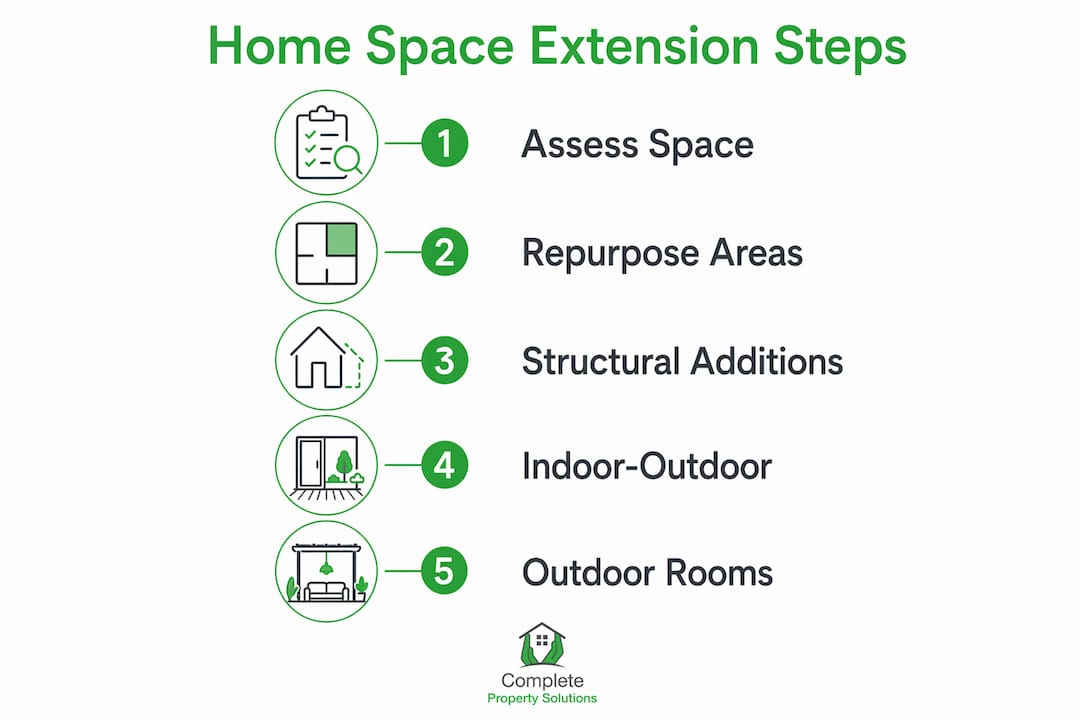
The first step is identifying your property’s “dead” zones. These are areas that exist but serve no real daily purpose: a half-landing too small to furnish, a box room used only for storage, or a ground-floor bathroom that could be relocated to free up a larger room. Finishing a basement or attic can add significant living space suitable for a home office, playroom, or snug, often with fewer structural requirements than a full external build.
Layout reconfiguration is the second lever. Combining a small kitchen with an adjacent dining room, or opening a wall between a hallway and a sitting room, creates an open floor plan that reads as considerably larger. The key is maintaining clear sightlines from entry points through to windows or garden views. Uninterrupted sightlines from entry to window double perceived room depth, which means the room feels bigger without gaining a single square metre.
Once the layout is right, spatial multipliers do the rest:
- Paint walls in warm whites, which reflect significantly more light than typical mid-tone greys
- Position mirrors directly opposite windows to bounce natural light across the room
- Extend curtain rods 15–30 centimetres beyond the window frame on each side to make windows appear wider
- Choose furniture scaled to the room and float it away from walls to create breathing room
- Use continuous flooring throughout open-plan areas to avoid visual breaks that chop up space
Pro Tip: When repurposing a utility room or pantry, keep the plumbing stack in place. Moving drainage adds cost and complexity. Design the new room around the existing infrastructure instead.
What structural extension options can increase your home’s living area?
Structural extensions are the most direct way to expand living space, and the options range from modest bump-outs to full two-storey additions. Each carries different implications for planning permission, build time, and disruption to daily life. Understanding the differences before committing saves considerable time and expense.
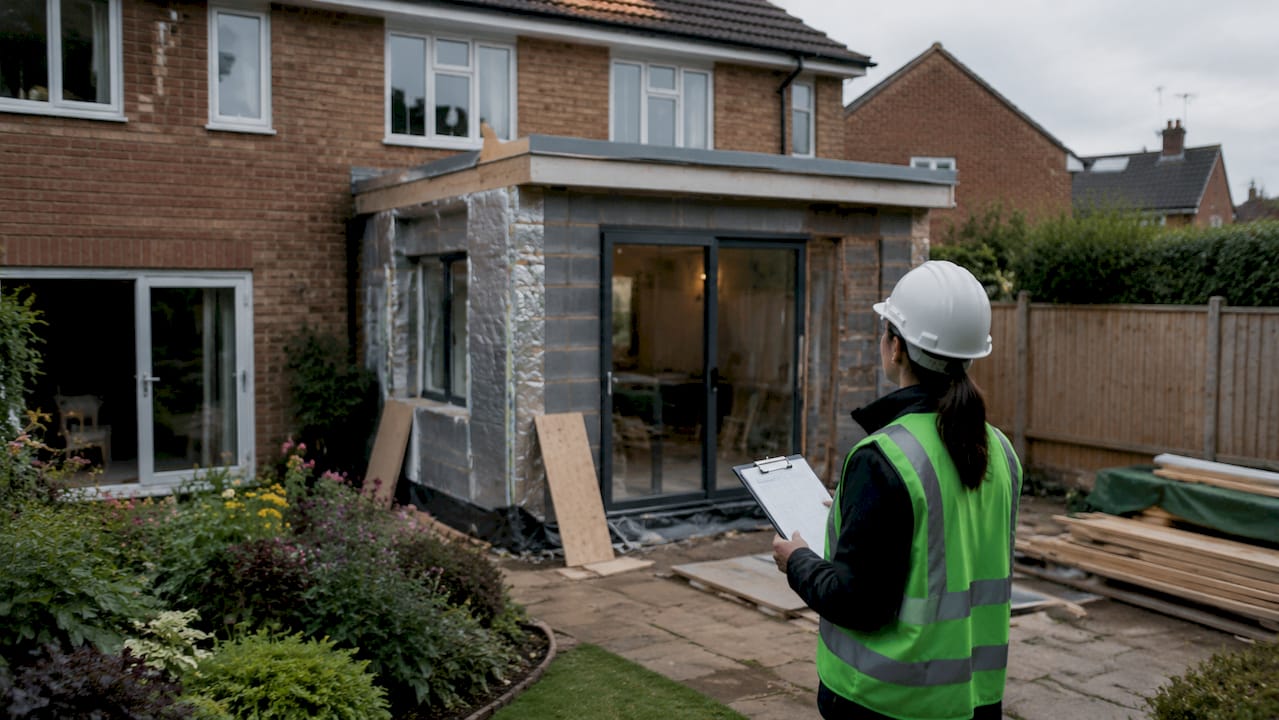
A bump-out is a small projection of 60–120 centimetres from an existing wall. It is the least disruptive option and, when cantilevered from existing floor joists, can avoid foundation work entirely. This makes bump-outs a practical solution for enlarging a kitchen, adding a bay window seat, or widening a bathroom. A full single-storey rear extension is the next step up, adding an entirely new room or significantly enlarging an existing one. Second-storey additions are the most complex and expensive route, requiring structural reinforcement of the existing ground floor and, in most cases, full planning permission.
HUP buildings offer a compelling alternative to traditional brick-and-block construction for modular home additions. Modular additions are typically 10–20% less expensive than equivalent stick-built construction. That cost difference is meaningful on a project of any scale.
| Extension type | Complexity | Planning permission likely? | Foundation work required? |
|---|---|---|---|
| Bump-out (cantilevered) | Low | Often not required | No |
| Single-storey rear extension | Medium | Sometimes (check permitted development) | Yes |
| HUP building addition | Medium | Depends on size and location | Sometimes |
| Loft conversion | Medium | Often permitted development | No |
| Second-storey addition | High | Yes | Reinforcement required |
Zoning, setbacks, and lot coverage must be verified before any structural work begins. In England, permitted development rights allow certain extensions without a full planning application, but these rights have limits on height, depth, and proximity to boundaries. Complete-property’s guide on planning permission requirements is a practical starting point for understanding what applies to your property.
Pro Tip: Build outwards before building upwards whenever your lot coverage allows it. Ground-level extensions are faster to build, less disruptive to live through, and generally less expensive than second-storey work.
How do you create seamless indoor-outdoor living spaces?
Indoor-outdoor integration is one of the most effective ways to expand living space without adding a single brick. The principle is straightforward: treat your covered outdoor area as a genuine room, not an afterthought. The most common design error is treating the threshold as a back wall. Treating the threshold as a transition rather than a boundary, and angling furniture to face outdoor focal points, restores the visual connection that makes a space feel continuous.
Getting the infrastructure right is non-negotiable for year-round use. A covered outdoor living area of any practical size requires dedicated electrical circuits for lighting, heating, and appliances. Infrared heaters extend the usable season considerably in the North West of England, where evenings cool quickly even in summer. Layered lighting at 20–30 lumens per square foot prevents the flat, uninviting look that plagues poorly lit outdoor rooms after dark.
Flooring choice is the single most powerful tool for visual continuity. Large-format porcelain tiles rated for outdoor use create a genuinely seamless transition when the same tile runs from inside to outside. Wood-look porcelain balances warmth with low maintenance, which suits the British climate far better than real timber decking.
Key principles for strong indoor-outdoor flow:
- Use bi-folding doors or large sliding doors to remove the threshold entirely when open
- Match ceiling heights between the interior room and the covered outdoor space where possible
- Align outdoor furniture with interior sightlines so the eye travels naturally outward
- Extend subsurface irrigation and electrical conduit during the build to avoid costly retrofitting later
- Choose a single outdoor focal point, such as a specimen tree or a water feature, and orientate the space towards it
Pro Tip: Run electrical conduit and irrigation sleeves under any new paving during the build phase, even if you do not connect them immediately. Retrofitting these services later costs far more and requires breaking up finished surfaces.
What are stylish ways to add functional outdoor living spaces?
Outdoor rooms are defined spaces within your garden that serve a specific function, just as interior rooms do. A well-designed patio with a pergola, comfortable seating, and defined planting borders functions as a genuine living room. A covered deck with a built-in kitchen functions as a dining room. The key is treating the outdoor space with the same design rigour you would apply indoors.
Hardscaping creates the structure. Pathways connect the outdoor room to the house and to other garden areas, reinforcing the sense that the space belongs to the home rather than existing separately from it. Raised planters, low walls, and changes in level define zones without enclosing them. This approach works on modest gardens as well as larger plots.
The most popular additions that genuinely expand usable living area include:
- Patios and covered decks: The most accessible starting point, particularly when fitted with a pergola or solid roof covering
- Conservatories: A glazed extension that brings the garden inside, usable year-round with the right glazing specification
- Orangeries: A more architecturally substantial option than a conservatory, with solid walls, a lantern roof, and a feel closer to a permanent room. Complete-property’s guide on planning an orangery addition covers the key design decisions in detail
- Garden studios: A freestanding structure at the end of the garden, ideal for a home office or hobby room, often falling outside permitted development restrictions
- Cantilevered bump-outs: A small projection from a ground-floor room that creates a window seat or reading nook overlooking the garden
Layering plants at different heights around the perimeter of an outdoor room softens hard edges and creates a sense of enclosure without blocking light. Tall grasses, mid-height shrubs, and low ground cover used together give the space a finished, designed quality that furniture alone cannot achieve.
Key takeaways
The most effective way to extend your home living area combines internal space optimisation, the right structural addition for your plot, and genuine indoor-outdoor integration.
| Point | Details |
|---|---|
| Start with internal spaces | Repurposing lofts, basements, and utility rooms adds living space without expanding your footprint. |
| Match extension type to your plot | Bump-outs and single-storey extensions suit most properties; second-storey builds require more planning. |
| Treat thresholds as transitions | Aligning furniture and sightlines with outdoor focal points makes indoor-outdoor spaces feel genuinely connected. |
| Infrastructure first | Electrical circuits, heating, and flooring continuity determine whether an outdoor room works year-round. |
| Verify planning early | Checking permitted development rights and local zoning before committing avoids costly redesigns. |
What I have learned from 35 years of home extension projects
The homeowners who get the best results are the ones who resist the urge to build immediately. Every project I have been involved with that ran into difficulty shared one common factor: the decision to build was made before the existing space was properly assessed. Spending a few weeks mapping how you actually use your home, where the light falls, and which rooms you avoid, tells you more than any architect’s drawing at that stage.
The second lesson is that planning permission catches people off guard more often than it should. Permitted development rights in England are genuinely generous, but they have specific limits on depth, height, and proximity to boundaries. Getting a pre-application enquiry from your local authority costs very little and removes the uncertainty before you have spent anything on design.
The third thing I would tell any homeowner is to think about sightlines before anything else. The projects that feel transformative are almost always the ones where we opened up a view to the garden or created a visual connection between two previously separate spaces. That is not a structural change. It is a design decision, and it costs nothing extra to get right from the start.
Finally, do not underestimate the value of quality materials. A well-built extension with thermally efficient glazing and solid construction will serve you for decades. A cheaper build that lets in draughts or requires remedial work within five years is not a saving. It is a cost deferred.
— Gareth
How Complete-property can help you expand your living space
Complete-property has been delivering bespoke home extensions, conservatories, orangeries, and garage conversions across Warrington, St Helens, Wigan, Southport, and the surrounding North West for over 35 years. Every project is handled from concept to completion by an experienced, family-run team that takes genuine pride in the quality of its work.
Whether you are considering a single-storey rear extension, a garage conversion, or a full house extension designed to transform how you live, Complete-property provides fixed-price guarantees and personalised service at every stage. The team holds a five-star rating on Google, built on transparent communication and craftsmanship that homeowners trust. Get in touch to discuss your project and find out what is possible for your property.
FAQ
What is the cheapest way to add living space to a home?
Repurposing existing internal spaces such as a loft, basement, or underused utility room is the most cost-effective approach. These conversions avoid foundation work and often fall within permitted development rights.
Do I need planning permission to extend my home?
Many single-storey rear extensions fall under permitted development rights in England and do not require a full planning application. Size, height, and proximity to boundaries all affect eligibility, so checking with your local authority before starting is advisable.
What is the difference between a conservatory and an orangery?
A conservatory is predominantly glazed with a glass or polycarbonate roof, while an orangery has solid walls, a flat or lantern roof, and a more architectural feel closer to a permanent room. Orangeries generally offer better thermal performance and a stronger visual connection to the main house.
How do I make an outdoor space usable year-round?
A covered structure, infrared heating, and dedicated electrical circuits are the three requirements for year-round outdoor living. Choosing flooring rated for outdoor use and installing layered lighting at an appropriate level completes the setup.
Can a garage conversion add meaningful living space?
A garage conversion is one of the most practical ways to add a usable room without extending your home’s footprint. It typically requires building regulations approval rather than planning permission and can create a home office, gym, or additional reception room.


