

For most new homeowners, yes: renovating before you move in is the smarter choice, particularly for structural, electrical, and plumbing works. Empty rooms give trades unobstructed access, you avoid living through noise and dust, and you move into a finished home in a single clean transition rather than two disruptive ones.
Before you do anything else:
- Commission a full structural survey and read every flagged item
- Book an asbestos R&D survey if the property was built before 2000
- Get a Gas Safe engineer to check the boiler and gas installation
- Obtain fixed-price quotes from vetted trades before exchange completes
- Confirm which works need Building Regulations approval
Table of Contents
- Why do new homeowners renovate before moving in?
- Which renovations are worth doing before you move in?
- When does moving in first make more sense?
- Planning permission, Building Regulations, and essential safety checks
- Budgeting, timelines, and logistics for pre-move works
- A short decision checklist: what to finish before you move in
- Common mistakes new homeowners make when renovating before move-in
- How Complete-Property-Solutions helps with pre-move renovations
- Key takeaways
- A builder’s honest perspective on sequencing
- Ready to get a fixed-price quote? Here is how to start
Why do new homeowners renovate before moving in?
The single biggest reason is access. Trades work faster and more cleanly in an empty property. Plasterers do not need to dust-sheet an heirloom sideboard; electricians can chase walls without manoeuvring around sofas. That speed often translates into lower labour costs and a shorter programme.
- No double disruption: you live through the build once, not twice
- Cleaner finishes: plaster, paint, and flooring go down without furniture in the way
- Simpler removals: moving into a ready-to-live-in home avoids repeat handling of possessions
- Better snagging: defects are easier to spot and fix before your belongings arrive
Pro Tip: Builders and interior designers call the empty period between completion and move-in the “golden fortnight.” Use it. Book your key trades for that window the moment your offer is accepted, because reputable plasterers, electricians, and floor specialists often need two weeks’ notice or more.
Which renovations are worth doing before you move in?
Pre-purchase surveys frequently flag damp, roof defects, and outdated electrics as urgent items. Tackle those before cosmetics, every time.
High priority — do before moving in:
- Structural alterations: wall removals, RSJ installations, chimney removals (£1,500–£5,000+ depending on scope)
- Full rewire: typically £4,000–£8,000 for a three-bedroom house; walls must be opened and made good
- Major plumbing and drainage: £1,500–£6,000; far simpler without furniture blocking access
- Roof repairs or replacement: £2,000–£20,000 depending on size and condition
- Licensed asbestos removal: cost varies; property must be vacated until clearance testing passes
- Whole-house damp treatment or insulation: £500–£5,000+
Medium priority:
- Full kitchen refit: £5,000–£20,000+
- Major bathroom refurbishment: £3,000–£10,000
- New heating system or boiler: £3,000–£7,500
- Full replastering across multiple rooms: £2,000–£6,000
Lower priority — can wait:
- Decorating and painting
- Single-room cosmetic upgrades
- Minor joinery, shelving, or gradual improvements
| Work category | Typical cost range | Typical duration |
|---|---|---|
| Structural alterations / RSJ | £1,500–£5,000+ | 1–5 days |
| Full rewire (3-bed house) | £4,000–£8,000 | 5–10 days |
| Major plumbing / drainage | £1,500–£6,000 | 3–7 days |
| Roof repair / replacement | £2,000–£20,000 | 3–7 days |
| Full kitchen refit | £5,000–£20,000+ | 1–4 weeks |
| Full replastering (whole house) | £2,000–£6,000 | 1–2 weeks |
Costs widen significantly for older properties, bespoke materials, or restricted access. Always read your homebuyer’s survey in full before setting a budget.
When does moving in first make more sense?
There is no universal answer: if your budget is tight, the property is safe to occupy, and only cosmetic work remains, moving in first is perfectly reasonable.
Situations where moving in first works well:
- Only decorating, carpeting, or minor joinery is needed
- You cannot afford temporary accommodation on top of renovation costs
- You need to occupy immediately due to lease or mortgage timing
The hybrid approach suits most homeowners with mixed scopes: move out for the most disruptive phases (whole-house rewire, licensed asbestos removal, major structural works), then return once the property is weather-tight and structurally sound. Run less intrusive jobs, such as tiling or decorating, while you are living there with careful planning.
Pro Tip: If you do stay on site, negotiate a safe-zone room into the contractor brief from day one. A finished bedroom and a working bathroom make an enormous difference to daily life during a build.
Planning permission, Building Regulations, and essential safety checks
Building Regulations approval is separate from planning permission and applies to most structural, electrical, and drainage works, even when no planning consent is required. Starting notifiable work without it can result in a stop-work order or forced removal of completed elements.
Essential checks before habitation:
- Structural survey (RICS Level 3 for older or heavily altered properties)
- Asbestos R&D survey for pre-2000 properties; licensed removal means vacating until clearance testing passes
- Gas safety check by a Gas Safe registered engineer
- Electrical safety check; Part P of the Building Regulations covers most domestic electrical work
- Drainage and ventilation inspection
Documents to secure before work starts:
- Building Regulations application submitted to Building Control
- Planning permission (where required; check with your local authority)
- Party wall notices served where applicable
- Contractor insurance confirmed
Pro Tip: Tie Building Regulations sign-off stages to your payment milestones in the contract. If an inspection fails, you withhold the next payment until it passes. This one clause protects you from a great deal of rework cost.
Budgeting, timelines, and logistics for pre-move works
Set your base estimate from fixed-price quotes, then add a contingency. Older UK properties, particularly Victorian and Edwardian terraces common across Warrington, St Helens, and Wigan, regularly reveal hidden defects once walls open: failed lintels, buried drainage, or inadequate foundations. A contingency of 15–20% of the total build cost is a sensible minimum.
The correct sequence for any renovation is services before surfaces: structural work first, then first-fix electrics and plumbing, then plastering, then floor preparation, then decoration, then final fittings. Skipping ahead wastes money.
| Phase | Typical duration | Notes |
|---|---|---|
| Structural / demolition | 1–5 days | Must complete before any services |
| First-fix electrics and plumbing | 3–10 days | Walls open; messy phase |
| Plastering and drying | 1–3 weeks | Fresh plaster needs at least 7 days before painting |
| Floor preparation | 3–7 days | Screeds may need several weeks to cure |
| Decoration and second fix | 1–2 weeks | Final fittings, sockets, switches |
Temporary accommodation costs vary widely but should be budgeted for openly; although a real cost, it buys you a finished home and avoids the far greater expense of redoing rushed work.
Pro Tip: Structure payments in stages: an initial deposit, milestone payments tied to inspection sign-offs, and a final retention held until snagging is complete. Never pay 100% up front.
A short decision checklist: what to finish before you move in
Work through these prompts to decide your approach:
- Is the work structural? Yes: complete it before moving in, without exception
- Is the property safe to occupy? Check gas, electrics, and roof before anyone sleeps there
- Does the work require the property to be empty? Rewiring, asbestos removal, and whole-house plastering all do
- Can you afford temporary accommodation? If yes, use the empty period for all high-priority works
- Is it purely cosmetic? Painting, carpeting, and minor joinery can wait
- Have you read the homebuyer’s survey in full? Every flagged urgent item should be resolved before you move in
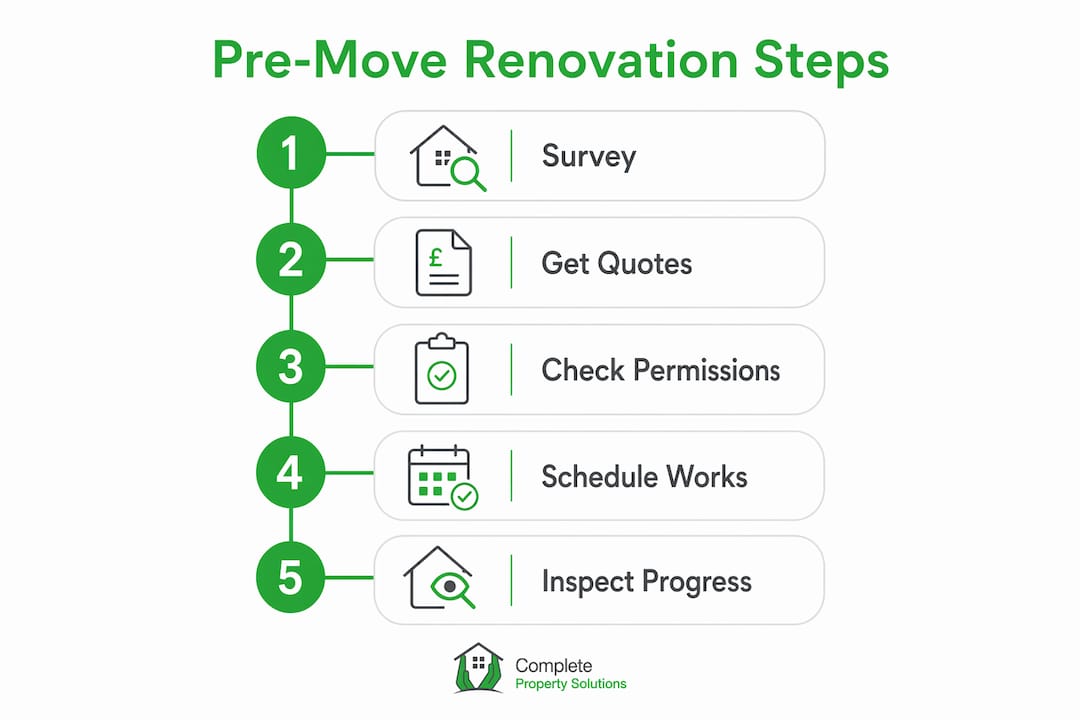
Immediate next steps: commission a survey, get at least three fixed-price quotes, confirm Building Regulations requirements with Building Control, and plan your renovation stages before booking a removal date.
Common mistakes new homeowners make when renovating before move-in
Doing cosmetic finishes before services. Painting walls before the electrician has chased in new wiring means replastering and redecorating. Always complete first-fix work before any surface finishes.
Under-estimating contingency. Most homeowners in Rainhill, Haydock, and Great Sankey who run over budget do so because a hidden defect emerged mid-build. Budget 15–20% contingency from the start, not as an afterthought.
Paying 100% up front. This removes your leverage at snagging. Staged payments protect you.
Poor contractor vetting. Check Guild of Master Craftsmen membership, read reviews, and ask for references from recent local projects. A low quote from an unvetted trade often costs more to fix than a fair quote from a trusted one.
Pro Tip: Ask every contractor for their public liability insurance certificate and confirm they hold the relevant accreditations (Gas Safe, NICEIC, or equivalent) before signing anything. A reputable builder will provide these without hesitation.
How Complete-Property-Solutions helps with pre-move renovations
Complete-Property-Solutions has been helping homeowners across Warrington, St Helens, Wigan, Culcheth, Lowton, Penketh, and the surrounding areas plan and deliver pre-move renovations for over 35 years. As a family-run business, we understand that buying a home is one of the biggest decisions you will ever make, and we treat every project with the care and attention it deserves.
Our services for new homeowners include:
- Full project design and planning from initial survey through to completion
- Structural alterations, wall removals, and RSJ installations
- House extensions and wraparound extensions
- Garage conversions to create practical living space before you move in
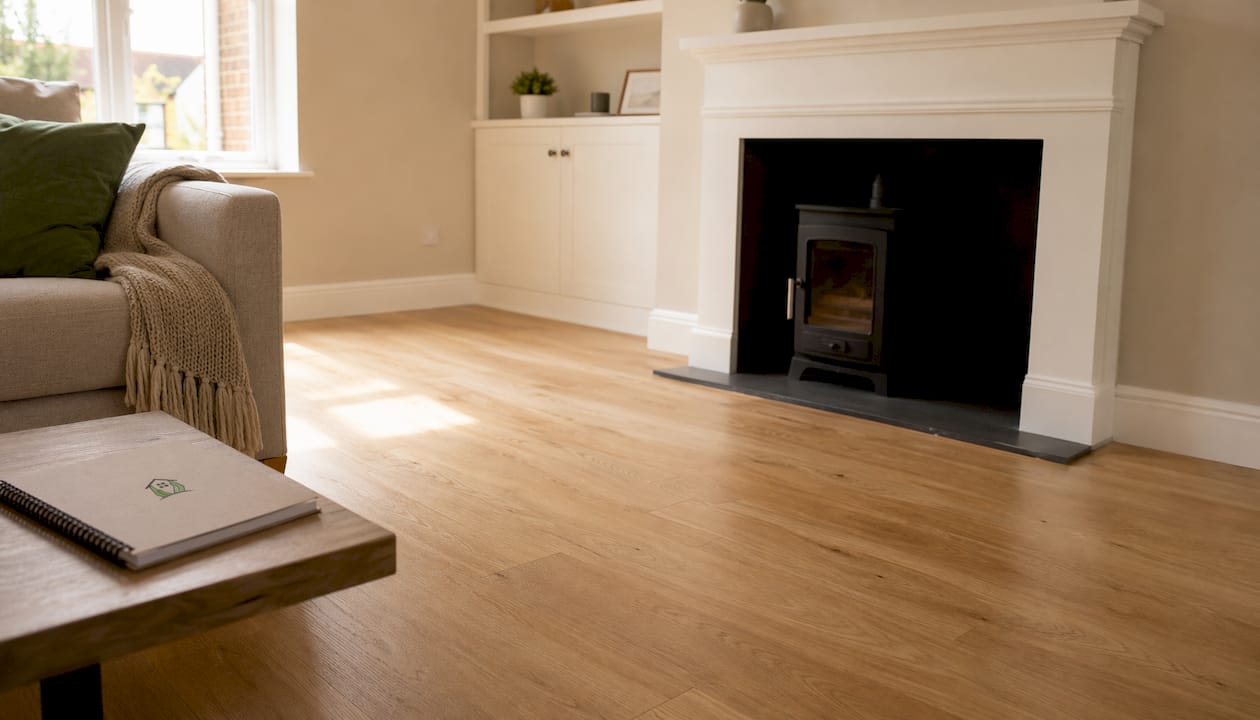
- Complete home renovations, kitchen and bathroom refits, replastering, and flooring
- Conservatory roof replacements using UltraRoof systems
- Transparent fixed-price quotations and professional project management throughout
We are proud members of the Guild of Master Craftsmen, an approved HUP! Building System partner, and authorised REHAU and UltraRoof installers. Every project comes with clear communication, staged milestone payments, and Building Regulations compliance built in from day one.
Key takeaways
Renovating before you move in is the right choice for structural, electrical, and service works because empty access speeds the job, reduces cost, and means you move into a finished home.
| Point | Details |
|---|---|
| Prioritise services before surfaces | Complete structural, electrical, and plumbing works before any plastering, flooring, or decoration. |
| Use the empty period wisely | Book key trades for the window between completion and move-in; reputable trades need advance notice. |
| Budget a 15–20% contingency | Older UK properties regularly reveal hidden defects once walls open; plan for this from the start. |
| Secure compliance before work starts | Submit Building Regulations applications and confirm Gas Safe and Part P requirements before any trade begins. |
| Complete-Property-Solutions | Provides fixed-price quotes, full project management, and 35+ years of experience for pre-move renovations across Warrington, St Helens, and Wigan. |
A builder’s honest perspective on sequencing
The homeowners who get pre-move renovations right are rarely the ones with the biggest budgets. They are the ones who sequence correctly and resist the urge to rush. The most common mistake we see on site is a homeowner who has had the kitchen fitted and the walls painted before the electrician has finished first-fix. That work has to come out. Every time.
If you are staying on site during any phase of the build, agree a safe-zone room with your contractor before work starts. A finished bedroom and a working bathroom are not luxuries during a renovation; they are the difference between a manageable build and a miserable one. Trades can work around a safe zone without difficulty if you ask early enough. Most will accommodate it without any fuss.
Ready to get a fixed-price quote? Here is how to start
Complete-Property-Solutions offers a no-obligation site visit and fixed-price quotation for homeowners across Warrington, St Helens, Wigan, and the wider North West.
Before your first visit, gather your homebuyer’s survey, note your priority works, and think about your moving timeline. Our team will assess the property, advise on sequencing and compliance, and provide a clear, itemised quote with no hidden costs. You will know exactly what is included, what the milestones are, and how the project will be managed from start to finish.
Whether you are planning a full home extension, a garage conversion, structural alterations, or a complete renovation before the removal van arrives, we are here to help you get it right first time. Get in touch today to arrange your site visit and take the first step towards moving into a home that is truly ready for you.


