

A rear kitchen extension is a purpose-built addition constructed at the back of your home that enlarges your kitchen and creates a more open, connected living space. In industry terms, this is classified as a single-storey or multi-storey rear extension, and it is one of the most popular forms of home improvement in the UK. Well-designed rear extensions can increase property value by 10–20%, making them a sound financial decision as well as a lifestyle upgrade. Whether you want more room for cooking, a better connection to your garden, or a brighter family space, a rear kitchen extension delivers on all three.
!
What is a rear kitchen extension and what types are available?
A rear kitchen extension is any structure added to the back of your property that expands the existing kitchen footprint. The three main types are single-storey, double-storey, and wraparound extensions. Each suits different budgets, plot sizes, and planning situations.
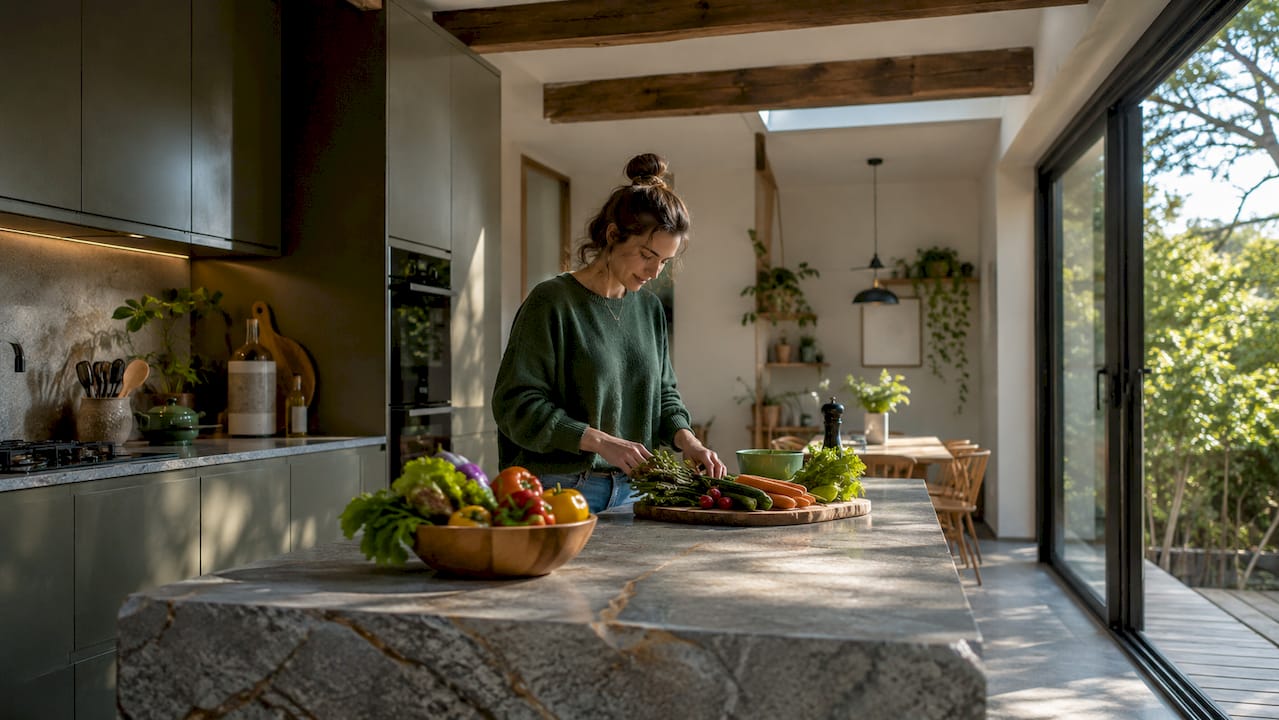
Single-storey extensions are the most common choice. They project from the rear of the ground floor, adding square footage to the kitchen and often incorporating a dining or living area. They are the most cost-effective option and the most straightforward to gain approval for under permitted development rules.
Double-storey extensions add space on two levels simultaneously. They are more expensive to build but offer excellent value per square metre when you also need an additional bedroom or bathroom above. Planning permission is almost always required for this type.
Wraparound extensions combine a rear projection with a side return, creating an L-shaped footprint that can dramatically transform a narrow Victorian or Edwardian terrace. They unlock corner space that would otherwise be wasted and allow for much larger open-plan layouts.
| Type | Typical Use | Relative Cost | Planning Route |
|---|---|---|---|
| Single-storey | Kitchen and dining expansion | Lower | Often permitted development |
| Double-storey | Kitchen plus bedroom above | Higher | Full planning permission |
| Wraparound | Open-plan L-shaped living | Highest | Usually full planning permission |
Pro Tip: If you are unsure which type suits your plot, commission a measured survey before speaking to an architect. Knowing your exact site constraints saves time and avoids abortive design fees.
What are the key design considerations for a rear kitchen extension?
Good rear kitchen design is determined long before you choose worktop colours or cabinet handles. The structural and daylight decisions you make at the outset define whether the finished space feels bright and generous or dark and cramped.
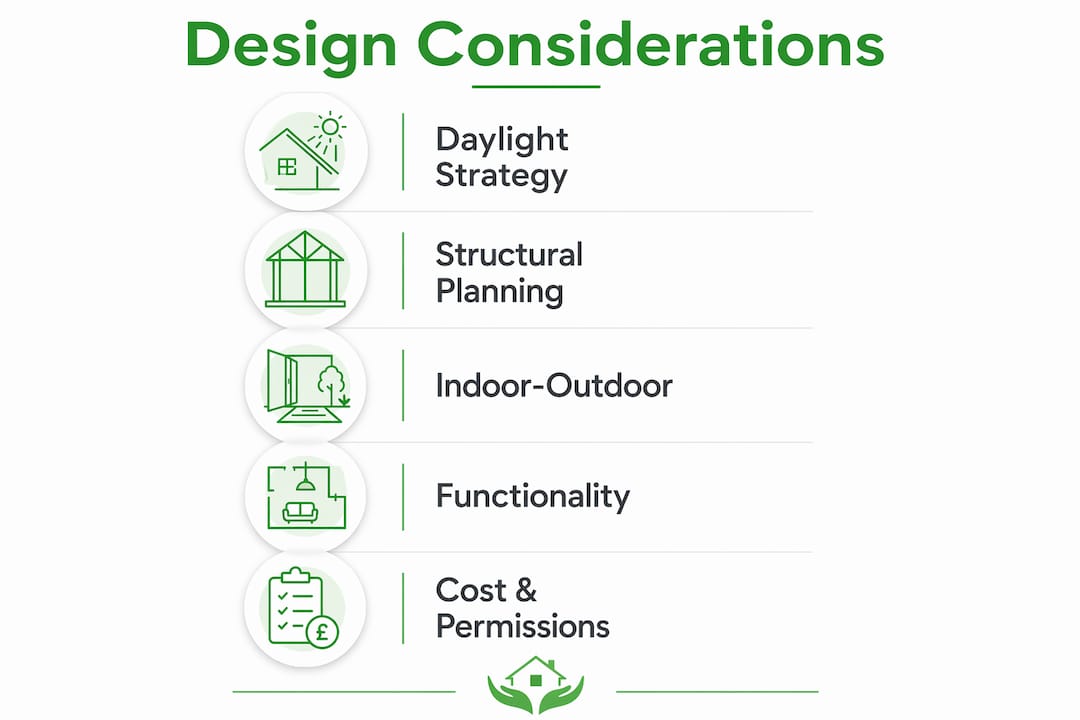
Daylight strategy
Rooflights and structural steel placement must be planned together from the very beginning. A flat or low-pitch roof extension that lacks rooflights will create a dark middle zone in your existing kitchen, particularly in older terraced homes where the rear room sits far from the front windows. Specify lantern roofs or flush rooflights early in the design process, not as an afterthought.
Structural planning
Steel beams are required wherever you remove a load-bearing wall to open up the kitchen to the new extension. The position of those steels affects ceiling height, rooflight placement, and the overall feel of the space. Aligning structural steel positions with your rooflight layout at the design stage avoids costly and disruptive changes once work has started on site.
Indoor-outdoor connectivity
Bi-fold doors and glazed panels are not simply a style choice. They solve a genuine lighting challenge in older homes by drawing natural light deep into the plan. A full-width set of bi-folding doors onto the garden also transforms how you use the space for entertaining, making the kitchen feel twice its actual size on warm days.
Key design decisions to address before work starts:
- Rooflight and glazing specification: size, framing material, and thermal performance
- Structural openings: beam size, column positions, and ceiling height implications
- Floor level continuity: matching internal and external levels for a true indoor-outdoor flow
- Material palette: matching brickwork, render, or cladding to the existing house
- Neighbour impact: shadow analysis and window positioning to avoid overlooking disputes
Pro Tip: Ask your builder or architect to produce a shadow diagram before finalising the roof design. This shows exactly how much daylight the extension will receive at different times of year and prevents nasty surprises after completion.
!
What does a rear kitchen extension cost in 2026?
Cost is the question every homeowner asks first, and the honest answer is that it varies considerably. Starting costs for a rear extension in London begin at around £57,000, though prices in the North West of England are typically lower. That figure reflects a basic single-storey structure before kitchen fitting, glazing upgrades, or internal finishes are added.
The factors that push costs up are predictable once you know what to look for:
- Size: every additional square metre adds labour and materials
- Glazing specification: large bi-fold door sets and structural glazing cost significantly more than standard windows
- Structural complexity: removing multiple load-bearing walls requires larger steels and more engineering input
- Ground conditions: poor soil or existing drainage runs beneath the footprint add excavation costs
- Planning fees: formal planning applications, structural engineer reports, and Party Wall awards all carry professional fees
Most budget overruns stem from design decisions made before a single brick is laid, not from builder errors during construction. Changing the position of a rooflight or adding a structural opening mid-build can cost thousands in abortive work and delays. Locking down your design fully before work starts is the single most effective cost-control measure available to you.
Practical budgeting tips:
- Obtain at least three fixed-price quotes from reputable local builders
- Include a contingency of 10–15% for unforeseen ground or structural issues
- Agree all finishes and fittings before contracts are signed
- Avoid scope changes once construction has begun
What planning permissions apply to rear kitchen extensions?
Planning rules for rear extensions in England are governed by the General Permitted Development Order, with specific limits depending on your property type. Understanding these rules before you appoint a designer saves time and avoids abortive work.
- Detached houses can extend up to 4 metres to the rear under permitted development without a formal planning application. Semi-detached and terraced houses are limited to 3 metres.
- The Larger Home Extension scheme allows detached houses to extend up to 8 metres and other houses up to 6 metres, subject to a neighbour consultation process and local authority approval.
- Coverage limits apply regardless of extension depth. You cannot cover more than 50% of the land around the original house with outbuildings and extensions combined.
- Article 4 Directions remove permitted development rights in designated areas, including many conservation areas and some streets in historic towns. Always check with your local planning authority before assuming permitted development applies.
- Listed buildings require listed building consent for any extension, regardless of size. This applies to both the exterior and interior alterations.
- Building regulations apply to all extensions regardless of planning status. They cover structural integrity, fire safety, insulation, drainage, and ventilation. Your builder must submit a building notice or full plans application before work starts.
- The Party Wall Act 1996 applies to boundary works where your extension is built close to or on the boundary with a neighbour. You must serve a formal notice and may need a Party Wall Award before construction begins.
Breaching even one permitted development condition can require a retrospective planning application or a costly redesign. Early consultation with your local planning authority costs nothing and protects your project.
How can you maximise functionality in a rear kitchen extension?
A rear kitchen remodel is most successful when the design serves how you actually live, not just how the space looks in photographs. Open-plan layouts that combine kitchen, dining, and living areas are the most popular choice, and they work best when storage and appliance placement are thought through from the start.
One of the most effective ideas borrowed from professional kitchen design is the back kitchen concept. A secondary kitchen is a dedicated prep and storage zone positioned adjacent to the main kitchen, typically behind a door or partial partition. It houses the dishwasher, larder fridge, wine cooler, and everyday small appliances, keeping the main kitchen visually calm and clutter-free. For busy households and those who entertain regularly, a well-designed secondary kitchen transforms how the whole space functions.
!
Practical ideas to get the most from your extension:
- Wet wall planning: group the sink, dishwasher, and washing machine on a single wall to minimise plumbing runs and cost
- Island positioning: allow at least 900mm of clear circulation space on all sides of a kitchen island
- Bi-fold door placement: position the main seating area adjacent to the doors to maximise the garden connection
- Indoor-outdoor features: a flush threshold between internal floor and external patio removes the visual barrier and makes the garden feel like an extension of the room
- Utility integration: if space allows, incorporate a utility room or back kitchen to handle laundry and bulk storage separately from the cooking zone
A solid roof with integrated insulation is worth considering if your extension will be used year-round as a living space. It performs better thermally than a polycarbonate or glass roof and reduces noise from rain significantly.
Key takeaways
A rear kitchen extension is one of the most financially and practically rewarding home improvements available to UK homeowners, provided the design, planning, and budget are managed correctly from the outset.
| Point | Details |
|---|---|
| Definition is clear | A rear kitchen extension adds space at the back of your home, expanding the kitchen and connecting it to the garden. |
| Type determines cost and planning | Single-storey suits most budgets; double-storey and wraparound require more investment and usually full planning permission. |
| Design decisions drive outcomes | Rooflight placement, structural steels, and bi-fold door positions must be fixed early to avoid costly changes. |
| Budget overruns are avoidable | Lock down your full design before work starts; most cost increases come from mid-build changes, not builder errors. |
| Planning rules are strict | Permitted development limits are 4 metres for detached and 3 metres for semi-detached houses; always verify before proceeding. |
What i have learned after 35 years of building rear extensions
Homeowners almost always come to us with a mood board full of beautiful kitchens they have found online. That enthusiasm is fantastic, and we love seeing it. But the projects that go smoothly are the ones where we spend the first conversations talking about structure and light, not worktops and cabinet colours.
The single biggest mistake I see is treating the rooflight as an optional extra to be decided later. By the time a homeowner realises the new kitchen feels dark, the roof structure is already built and changing it costs a significant amount. Get the glazing specification agreed before the foundations are dug. It sounds obvious, but it is genuinely the most common and most expensive oversight we encounter.
I would also say this: talk to your neighbours before you do anything else. Not because you are legally obliged to at that stage, but because a five-minute conversation over the fence prevents months of tension and potential legal disputes under the Party Wall Act. Most neighbours are perfectly reasonable when they feel informed and respected. The ones who become difficult are almost always the ones who felt surprised.
Finally, do not underestimate the back kitchen idea. We have fitted secondary prep kitchens in extensions for clients who were initially sceptical, and without exception they tell us it is the feature they use most. A calm, beautiful main kitchen and a hardworking hidden workspace behind it is a combination that genuinely changes daily life.
— Gareth
Plan your rear kitchen extension with Complete-property
!
Complete-property has been helping homeowners across Warrington, St Helens, Wigan, Southport, and the surrounding areas build beautiful, high-quality rear kitchen extensions for over 35 years. We handle everything from initial design and planning through to final fit-out, with a fixed-price guarantee so you always know exactly what you are paying. Our family-run team brings genuine care and craftsmanship to every project, and our five-star Google reviews reflect the trust our customers place in us. If you are ready to explore what a rear extension could do for your home, get in touch with us today for a personalised, no-obligation consultation. You can also find out more about building a home extension on our website.
FAQ
What is a rear kitchen extension?
A rear kitchen extension is a structure built onto the back of a home to expand the kitchen and living space. It typically includes new glazing, structural openings, and a connection to the garden.
Do i need planning permission for a rear kitchen extension?
Not always. Detached houses can extend up to 4 metres and semi-detached or terraced houses up to 3 metres under permitted development, provided all other conditions are met. Larger extensions require a formal planning application.
How much does a rear kitchen extension cost in the UK?
Costs vary by size, location, and specification. Starting prices in London are around £57,000, with projects in the North West of England typically coming in lower. Glazing, structural complexity, and finishes are the main cost drivers.
What is the party wall act and does it apply to my extension?
The Party Wall Act 1996 applies when your extension is built close to or on the boundary with a neighbouring property. You must serve a formal notice on affected neighbours before construction begins.
What is a back kitchen and should i include one?
A back kitchen is a secondary workspace adjacent to the main kitchen, used for prep, storage, and small appliances. It keeps the main kitchen tidy and functional, and is particularly useful for busy households and those who entertain regularly.


