

A house renovation stages checklist is a structured sequence of tasks, approvals, and decisions that guides a project from initial planning through to final completion. Without it, homeowners risk costly rework, failed inspections, and budget overruns that could have been avoided entirely. The industry term for this structured approach is a “construction sequence” or “renovation programme,” and following it correctly is the single most reliable way to keep your project on track. This guide covers every phase in the right order, with practical checklist items at each stage.
1. What are the distinct stages in a house renovation stages checklist?
The correct construction sequence runs: demolition and structural work, rough-in trades (electrical, plumbing, HVAC), insulation and drywall, interior finishes, then flooring and fixtures last. Each phase unlocks the next. Skipping ahead or overlapping stages is the most common cause of expensive demolition of work that has already been completed.
Here is how each major phase breaks down:
Planning and budgeting. Define the full scope of your project before any work begins. Set a contingency fund of 10–20% of your total budget to cover unexpected issues uncovered during demolition or structural work. That buffer is not pessimism. It is the difference between a project that finishes and one that stalls.
Permitting and compliance. Submit all planning applications and building regulations notices before any physical work starts. In England and Wales, most structural alterations, extensions, and electrical work require formal approval. Starting without permits risks enforcement notices and can complicate future property sales.
Demolition and structural work. Strip out what is being removed before any new work goes in. Structural repairs, steelwork, and underpinning all happen at this stage. This is also when hidden problems, such as damp, rot, or outdated wiring, tend to surface.
Mechanical rough-ins. Electrical first fix, plumbing first fix, and HVAC ductwork all run through open walls and floors before anything is closed up. The order within this stage matters too: electrical conduit and plumbing pipes need to be in place before insulation goes in.
Insulation and drywall. Once rough-in inspections have passed, insulation is fitted and walls are boarded. Do not close up walls before inspections are signed off. Doing so forces demolition of finished surfaces if changes are required later.
Interior finishes. Plastering, skimming, and taping follow drywall. Drywall mud requires at least 30 days to cure fully before painting. Painting too early causes permanent shadowing and finish defects that are difficult to correct.
Flooring, trim, and fixtures. Flooring, skirting boards, door architraves, kitchen cabinetry, and bathroom fixtures are all installed last. These are the most visible and expensive finishes. Installing them before the building has dried out and settled is a common and costly mistake.
Pro Tip: Treat your renovation checklist as a dependency map, not just a to-do list. Each item on the list is a gate that must open before the next stage can proceed.
2. How should homeowners sequence renovation tasks to prevent costly mistakes?
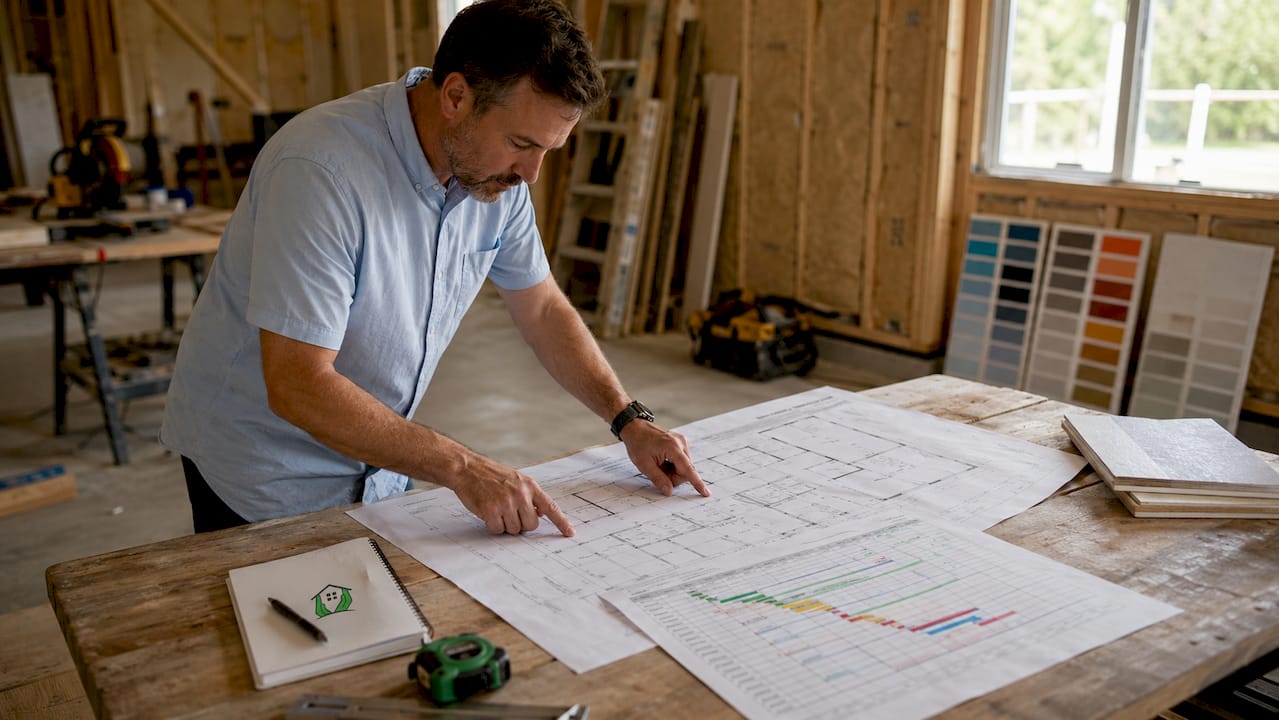
Inspection schedules, not contractor speed, should dictate the pace of your renovation. This is the principle most homeowners underestimate. A contractor who moves fast but closes walls before an inspection passes will cost you far more in rework than one who works steadily and waits for sign-off.
The most damaging sequencing errors fall into three categories:
- Finish work ordered too early. Never order cabinetry or book finish painters before rough-in inspections have passed. Changes required after inspection can mean demolishing surfaces that have already been finished.
- Flooring installed before drying out. New plaster, screed, and concrete all release moisture as they cure. Laying timber or engineered flooring too early causes warping and joint failure.
- Caulking and trim before HVAC settling. New HVAC systems should run through a full heating or cooling season before final trim and caulking. Wood movement caused by temperature and humidity cycling will crack fresh caulk and open joints.
The table below shows the correct sequence alongside the most common error at each stage:
| Stage | Correct approach | Common mistake |
|---|---|---|
| Rough-in trades | Complete before insulation | Insulating before electrical sign-off |
| Drywall and plaster | Board after inspection passes | Closing walls before inspector visits |
| Painting | Wait 30 days after drywall mud | Painting within days of skimming |
| Cabinetry and joinery | Install after all inspections pass | Ordering before rough-in is approved |
| Flooring | Last stage, after full drying | Laying before screed has cured |
Pro Tip: Build your contractor schedule around your building control inspection dates, not the other way around. Ask your inspector for available dates at the start of each phase and work backwards.
3. What are the key checklist items to track at each renovation stage?
A precise renovation planning checklist covers tasks, approvals, and decisions. The items below are grouped by phase so you can track progress clearly.
Planning phase
- Total budget confirmed and contingency fund set at 10–20%
- Scope of work documented in writing, specifying what is saved, what is replaced, and finish levels
- A detailed written scope is the single most important document for obtaining accurate, comparable contractor quotes
- Contractor shortlist drawn up; references checked; public liability insurance verified
- Planning permission or permitted development rights confirmed with your local authority
Permitting and pre-construction phase
- Building regulations application submitted (full plans or building notice)
- Party wall agreements served where required
- Structural engineer appointed if load-bearing walls or steelwork are involved
- All contractors confirmed with signed contracts and agreed start dates
Construction phase
- Demolition complete and waste removed from site
- Structural work signed off by structural engineer
- Electrical first fix complete and ready for inspection
- Plumbing first fix complete and pressure tested
- HVAC ductwork and pipework in place
- Building control inspection booked and passed before boarding
- Insulation fitted to specification
- Drywall or plasterboard fixed and taped
- Plastering or skimming complete; 30-day curing period observed before painting
Finish phase
- Second fix electrical (sockets, switches, consumer unit)
- Second fix plumbing (sanitaryware, taps, radiators)
- Painting and decorating complete
- Kitchen cabinetry and worktops fitted
- Bathroom tiling and fixtures installed
- Flooring laid throughout
- Skirting boards, architraves, and door furniture fitted
- Final building control inspection booked and certificate obtained
4. How long does each stage take and what timelines should you expect?
Realistic timelines are one of the most underestimated parts of home renovation planning. Most homeowners underestimate the planning phase and then feel pressure to rush the construction phase to compensate.
Planning and design: 1–3 months. This includes finalising your scope, obtaining quotes, appointing contractors, and submitting permit applications. Planning should start 6–12 months ahead of your intended start date for larger projects.
Permitting: 4–8 weeks. Building regulations applications under the full plans route typically take 5 weeks for approval. Permitted development does not require prior approval, but building control notification is still required before work starts.
Demolition and structural work: 1–3 weeks. For most moderate remodels, this phase is relatively short. Larger structural changes, such as removing chimney breasts or installing steel beams, add time.
Mechanical rough-ins: 2–4 weeks. Electrical, plumbing, and HVAC first fix work runs concurrently where possible. Inspection scheduling at the end of this phase is the most common cause of delays.
Insulation, drywall, and plastering: 2–4 weeks. Allow a full month after plastering before painting begins. Rushing this stage causes finish defects that are difficult to correct later.
Interior finishes and fit-out: 3–8 weeks. This is the longest finish phase for most projects. Kitchen and bathroom installations, tiling, flooring, and decorating all happen here. Moderate remodels generally take 3–6 months in total; full renovations with structural changes take 12–18 months.
Snagging and project closeout: 1–2 weeks. Walk the property with your contractor and document all outstanding items. Obtain your building control completion certificate before making final payment.
If you are living in the property during the renovation, plan your living arrangements around the noisiest and most disruptive phases. Demolition and structural work are the hardest to live alongside. Many homeowners in the North West find it practical to arrange temporary accommodation during the first four to six weeks of a full renovation.
Key takeaways
A successful renovation depends on following the correct construction sequence and treating each inspection as a gate that must pass before the next phase begins.
| Point | Details |
|---|---|
| Sequence is non-negotiable | Structural work must precede rough-ins, which must precede drywall and finishes. |
| Budget for the unexpected | Set aside 10–20% of your total budget as a contingency fund before work starts. |
| Inspections control the pace | Never close walls or order finish work before building control has signed off each phase. |
| Allow curing time | Drywall mud needs 30 days before painting; HVAC needs a full season before final caulking. |
| Document everything | A written scope of work is the foundation for accurate quotes and clear contractor accountability. |
Why I think most homeowners underestimate the checklist
People tend to think of a renovation checklist as a simple to-do list. In my experience, that misunderstanding is what causes most of the problems I see on site. A checklist is really a dependency map. Every item on it exists because something else cannot happen until it is done. The moment you treat it as optional or approximate, you start making decisions that cost you money.
The most consistent mistake I see is homeowners pushing contractors to move faster than the inspection schedule allows. Rushing contractors and skipping inspections nearly always leads to expensive rework. I have seen beautifully tiled bathrooms demolished because a plumbing inspection was skipped. The cost of waiting a few days for an inspector is nothing compared to the cost of undoing finished work.
The other thing I would say is that scope clarity at the start saves more money than any other single decision. When a homeowner hands a contractor a vague brief, the quotes come back all over the place and the project scope drifts. When the brief is precise, in writing, with finish levels specified, the quotes are comparable and the contractor has no room to reinterpret the job. If you are planning an extension or a significant renovation, reading through our home extension planning guide before you speak to anyone is time very well spent.
The checklist is not bureaucracy. It is the structure that protects your budget, your timeline, and the quality of the finished result.
— Gareth
Planning a renovation or extension? Complete-property can help
Complete-property has been guiding homeowners through every stage of the renovation and extension process for over 35 years. Whether you are planning a full house renovation, a home extension, or a garage conversion, our team manages the entire process from initial design through to building regulations sign-off and final completion. We work across Warrington, St Helens, Wigan, Southport, and the surrounding areas of the North West, and every project comes with a fixed-price guarantee so there are no surprises along the way. If you would like to talk through your project and get a clear picture of what each stage involves, get in touch with our friendly team today.
FAQ
What is the correct order to renovate a house?
The correct order is: planning and budgeting, permitting, demolition and structural work, mechanical rough-ins (electrical, plumbing, HVAC), insulation and drywall, interior finishes, then flooring and fixtures last. Following this sequence prevents costly rework.
How much contingency should I budget for a renovation?
Set aside 10–20% of your total project budget as a contingency fund. This covers unexpected issues such as hidden damp, structural problems, or changes required after inspections.
When can I start painting after plastering?
Drywall mud and fresh plaster require at least 30 days to cure fully before painting. Painting too early causes permanent shadowing and finish defects that are very difficult to correct.
Do I need building regulations approval for a house renovation?
Most structural alterations, electrical work, and extensions in England and Wales require building regulations approval. You must notify building control before work starts and obtain a completion certificate when the project finishes.
How long does a full house renovation take?
Moderate remodels typically take 3–6 months from start to completion. Full renovations involving structural changes generally take 12–18 months. Planning should begin 6–12 months before your intended construction start date.


